


As a young engineer, Edward Vandermeersch wasn’t allowed to touch a bolt. Then his father died, and he didn’t touch that either. At Rolling Hills in Oudenaarde, he learned how to feel things again and he built a brewery with his own hands that brought him back to life.
Words and reporting by Breandán Kearney
Illustrations by Cliff Lucas
This editorially independent story has been supported by VISITFLANDERS as part of the “Common Place” series.
I.
Alive
Before he was a brewer, Edward Vandermeersch was an engineer.
He was tasked with converting natural wood waste from the forestry and sawmill industry of Les Landes region in France into green energy. His focus was the Pin Maritime, (maritime pine tree), a fast growing hard pine with long needles and large cones. He was on a mission to build biomass cogeneration plants that could produce heat and electricity from the wood waste. “That’s what I did for a long time,” says Vandermeersch. “And it was very ideologically driven.”
Between 2011 and 2015, Vandermeersch was stationed in Labouheyre, not too far from the famous wineries of Jacques Thienpoint, whose distribution facility as a wine merchant sits next door to Vandermeersch’s brewery today. The Thienpoints and Vandermeersch’s are family. Lucy Thienpoint was his father’s grandmother, and Lucy’s brother was Georges Thienpoint, who founded the wine dynasty. Vandermeersch’s father, Pieter Vandermeersch, would spend his summer holidays in their Bordeaux vineyards with Jacques Thienpoint and his siblings.
Within just a few years in France as an engineer, however, the trappings of the big business that surrounded renewable energy began to sour Vandermeersch’s experience. “The big money behind it spoiled the party for me,” he says. And it wasn’t just politics. Vandermeersch had studied engineering at Ghent University, earning a Master’s degree in Mechanical Engineering between 2005 and 2010, and so when it came to working on these biomass projects, he found himself assigned exclusively to desk-based roles.
Like many academic-level engineers in Europe, Vandermeersch was given a project management role that kept him away from hands-on work. Insurance rules dictated that he was not permitted to work directly on rigs or buildings. “I wasn’t allowed to touch a bolt,” he says. “I wasn’t insured if I fell from a height at a place I shouldn’t have been.”
Instead, he found himself managing contracts and tying the technical side of projects to the economics of the company’s business plan. “It’s something that frustrated me,” he says. “All the field engineers that would come on site because of the contracts I fixed were the same age as me and they were just having the time of their lives. They were climbing up and down the installations like monkeys and making stuff work. That was what I wanted to do, but I wasn’t allowed to because I was overqualified.”
That was in the mid-2010s. For years, Edward Vandermeersch didn’t touch the things that were numbing him. On those biomass projects in France, he wasn’t permitted to climb rigs or mount equipment, and it killed him inside. When his father died in 2012, he didn’t touch that either, pushing down inside himself any emotion he might feel about grieving the death of a father with whom he had a complicated relationship.
Today, he’s the owner of his own brewery in the town in which he grew up. In the process of building the brewery, he learned to let it all in, and to feel things with his hands and his heart again, even if they’re difficult or painful.
Some things deaden you. But some things can bring you back to life.
*
II.
Provenance
The third time I’m meeting Edward Vandermeersch is different from the previous two times.
This time, it’s a pre-arranged visit to Rolling Hills, a small Oudenaarde brewery he’s been running with his youngest brother Antoon since 2020.
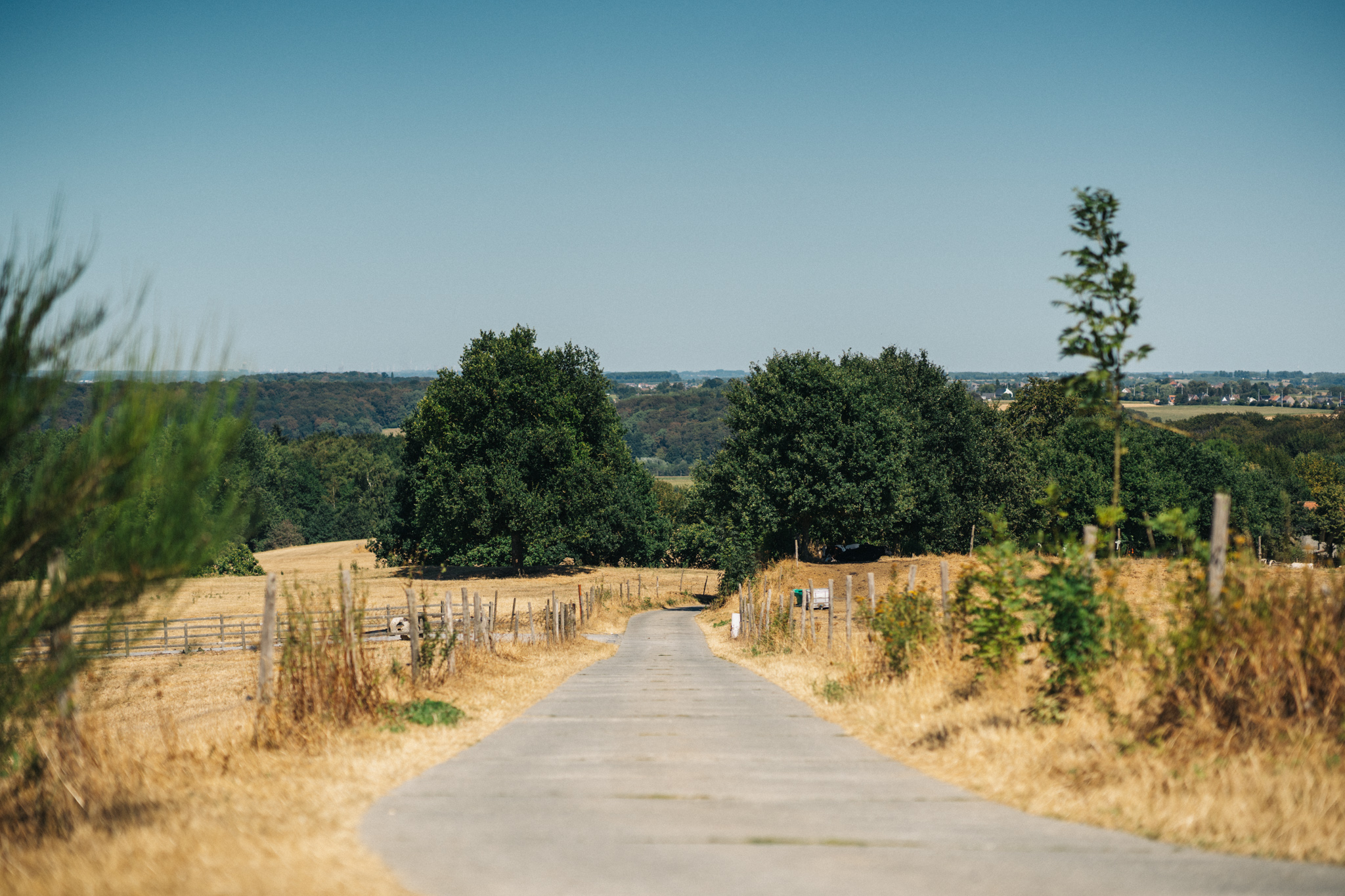
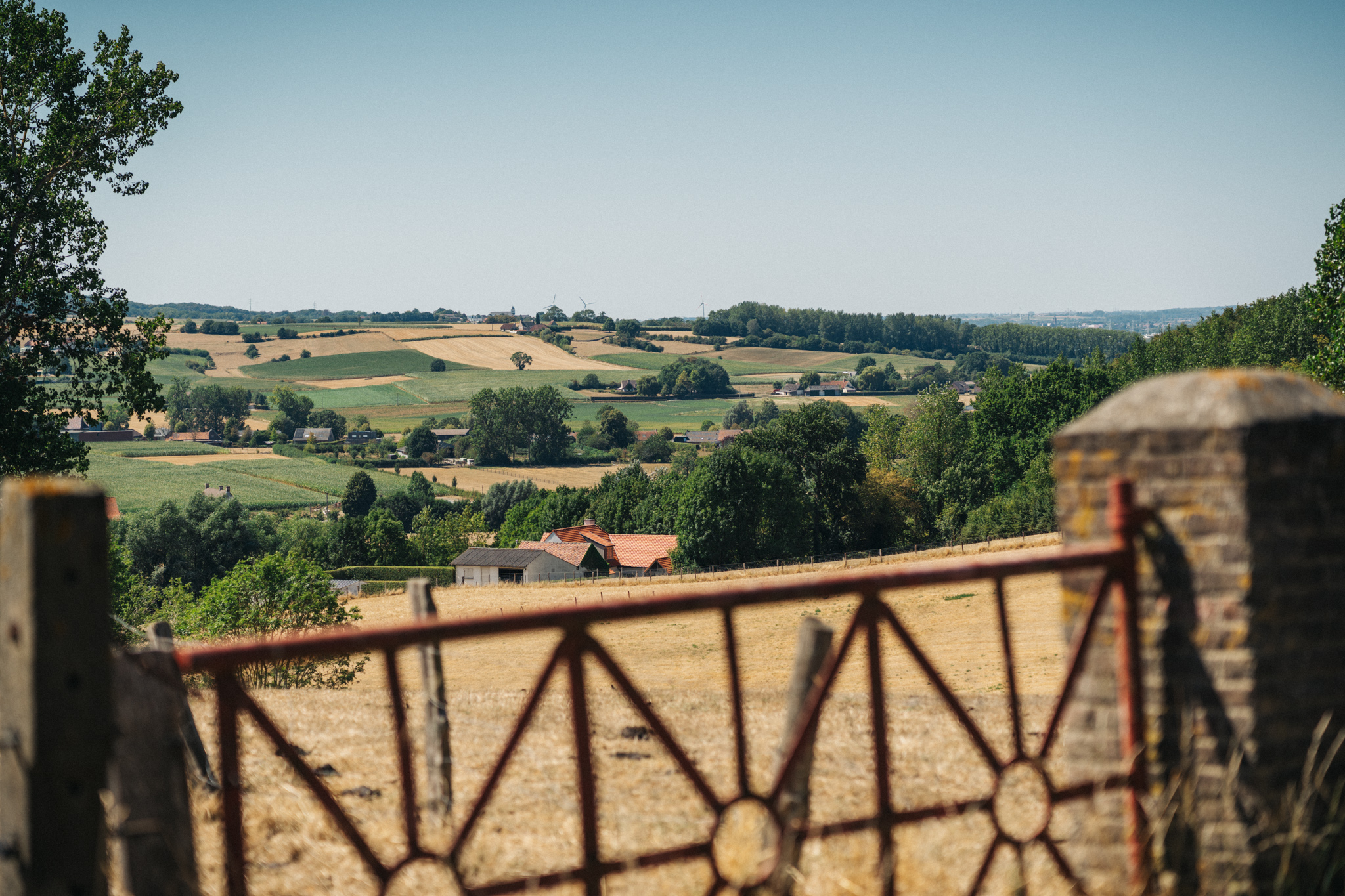
The drive over to the brewery does, I’m pleased to report, feature rolling hills. It’s a scenic rural landscape that stretches out from Oudenaarde across the towns of Ronse, Zottegem, and Geraardsbergen, with tight sloping country roads that connect windmills, watermills, and hilltop bluebell woodlands such as the Muziekbos, the Brakelbos, and the Kluisbos.
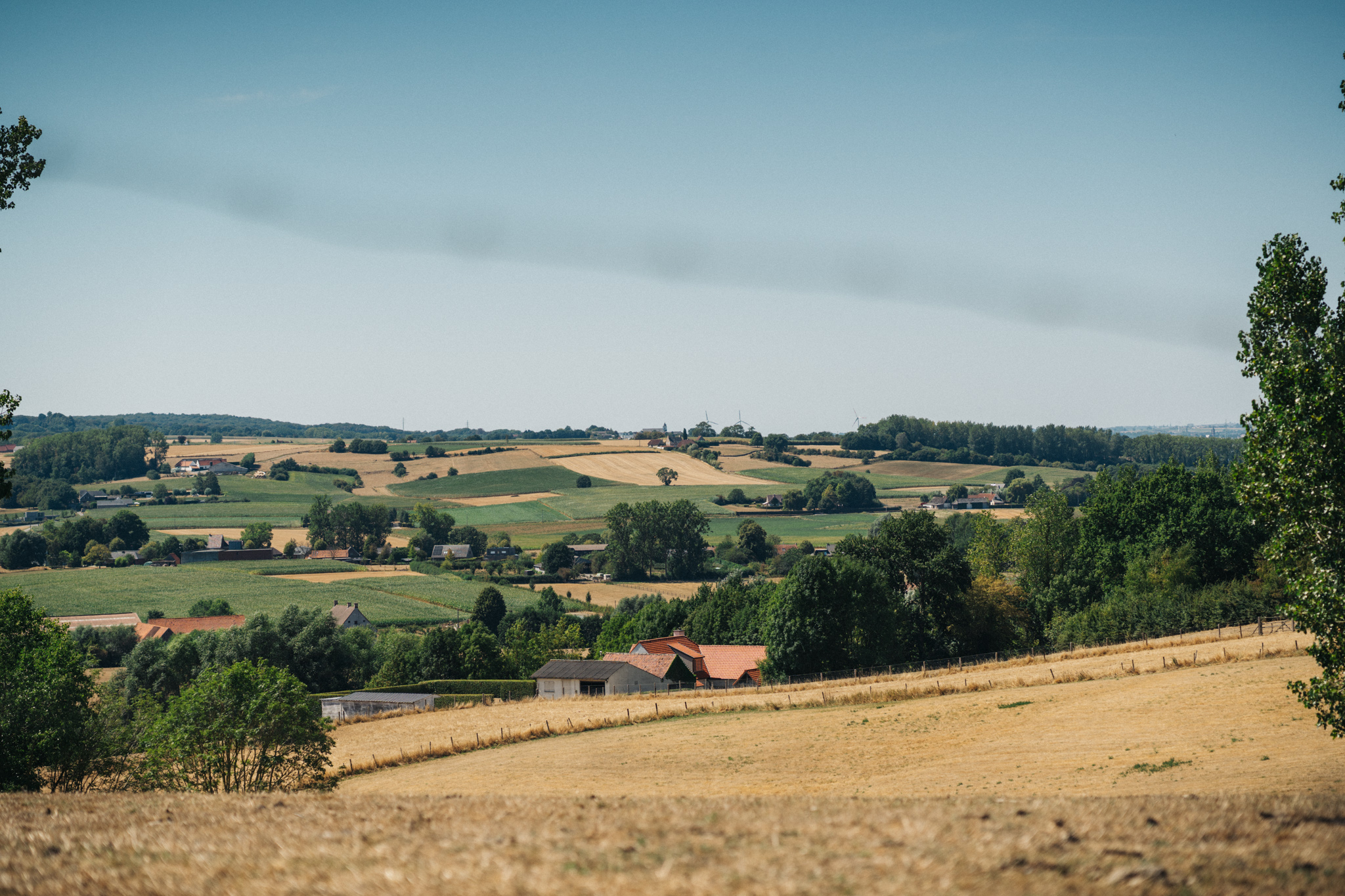
The rolling hills are one of the reasons the Flemish Ardennes has become an international cycling mecca, with a large part of major bike races such as the Ronde van Vlaanderen (Tour of Flanders) running through its villages. Those into cycling will know its toughest cobble-stone climbs by name: Koppenberg, Oude Kwaremont, and of course, the iconic Muur.
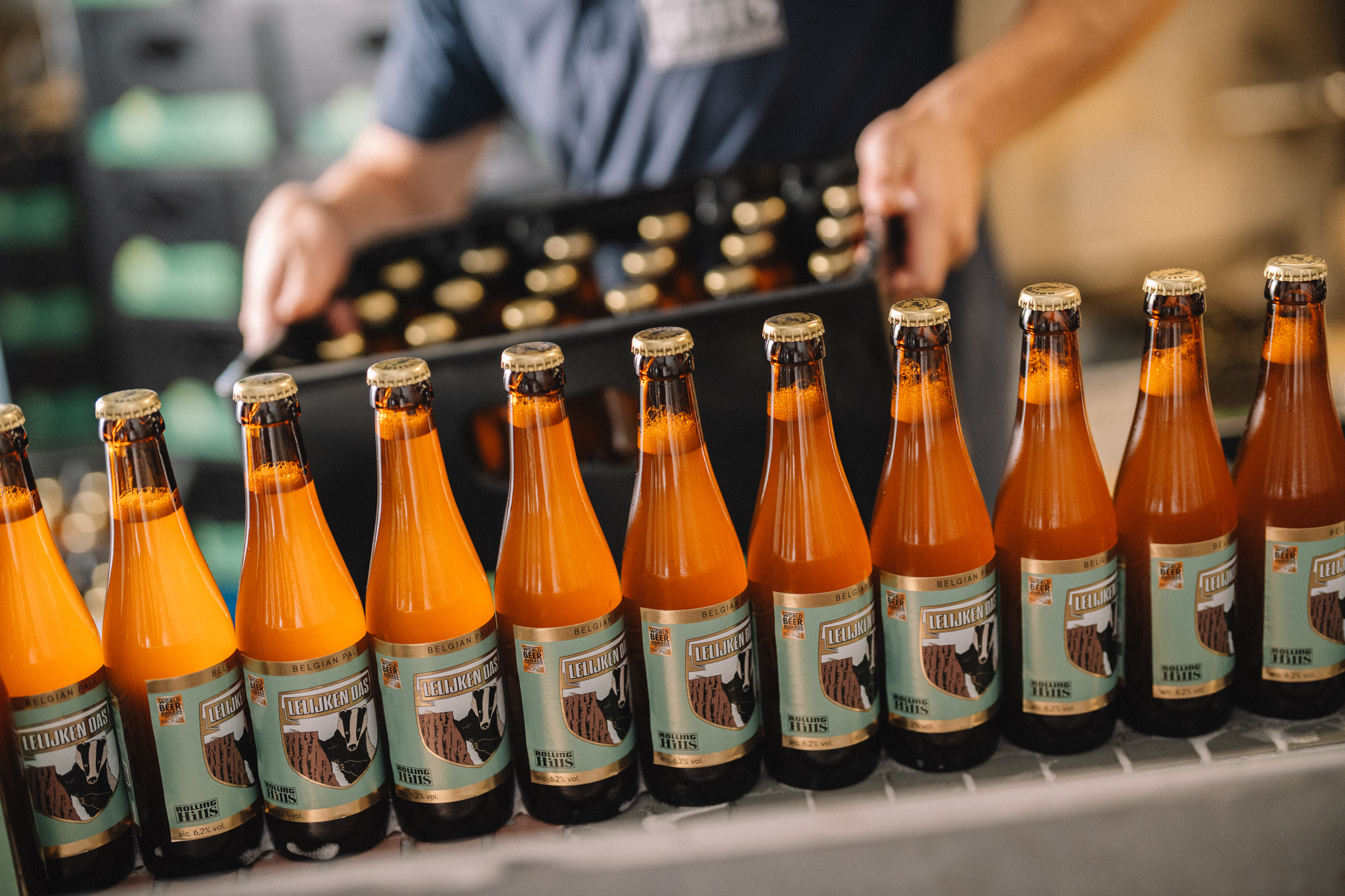
As a nod to the brewery’s provenance, the beers Vandermeersch brews here are branded with illustrations of the indigenous animals of the Flemish Ardennes.
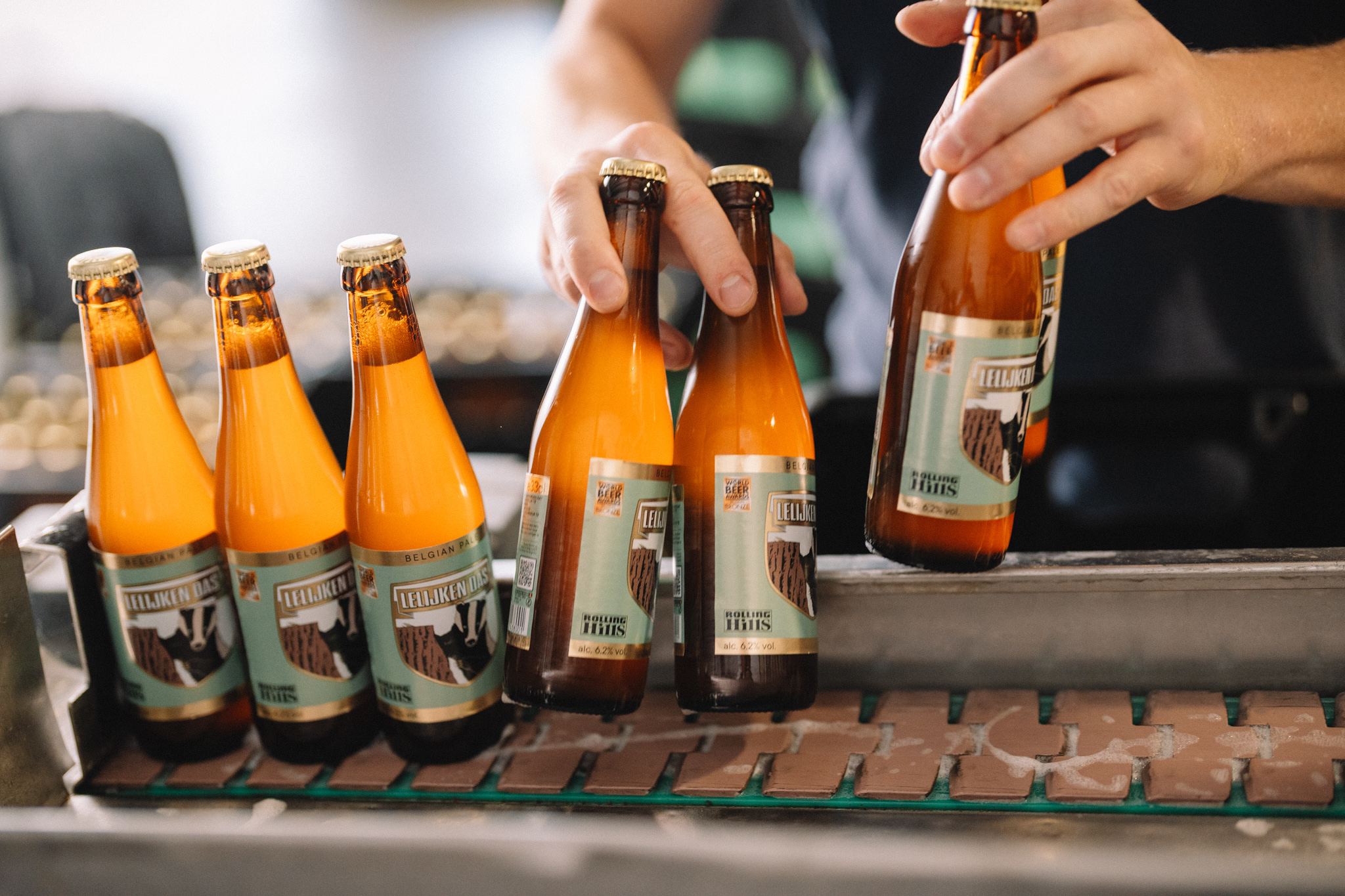
The Lelijken Das (“Naughty Badger”) is a Belgian Pale Ale of 6.2% ABV brewed with biscuit malt, Marris Otter, and Pils malt. Its fruitiness derives from both an ester-forward yeast strain and its Spalt Select and Cascade hops.
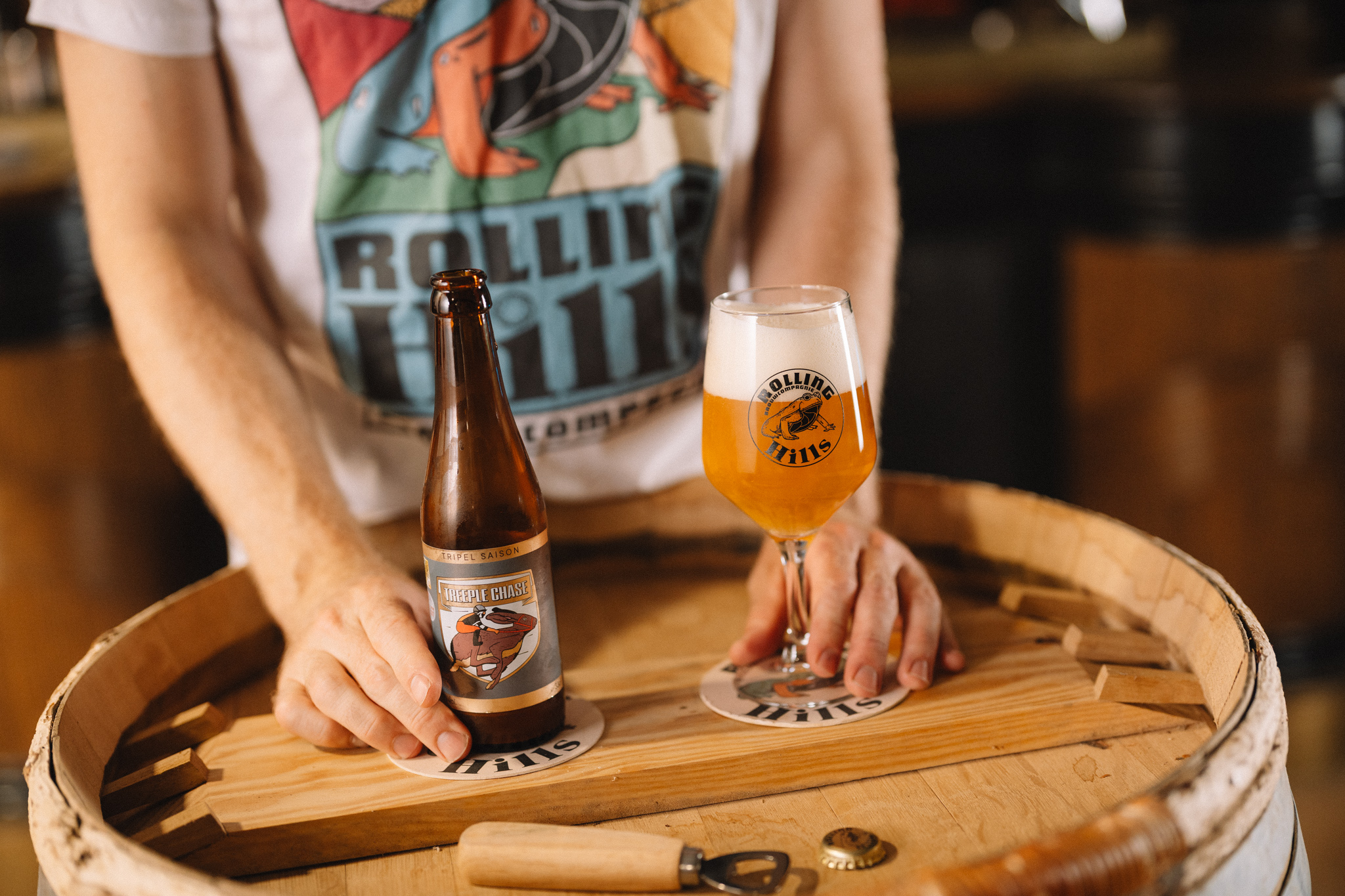
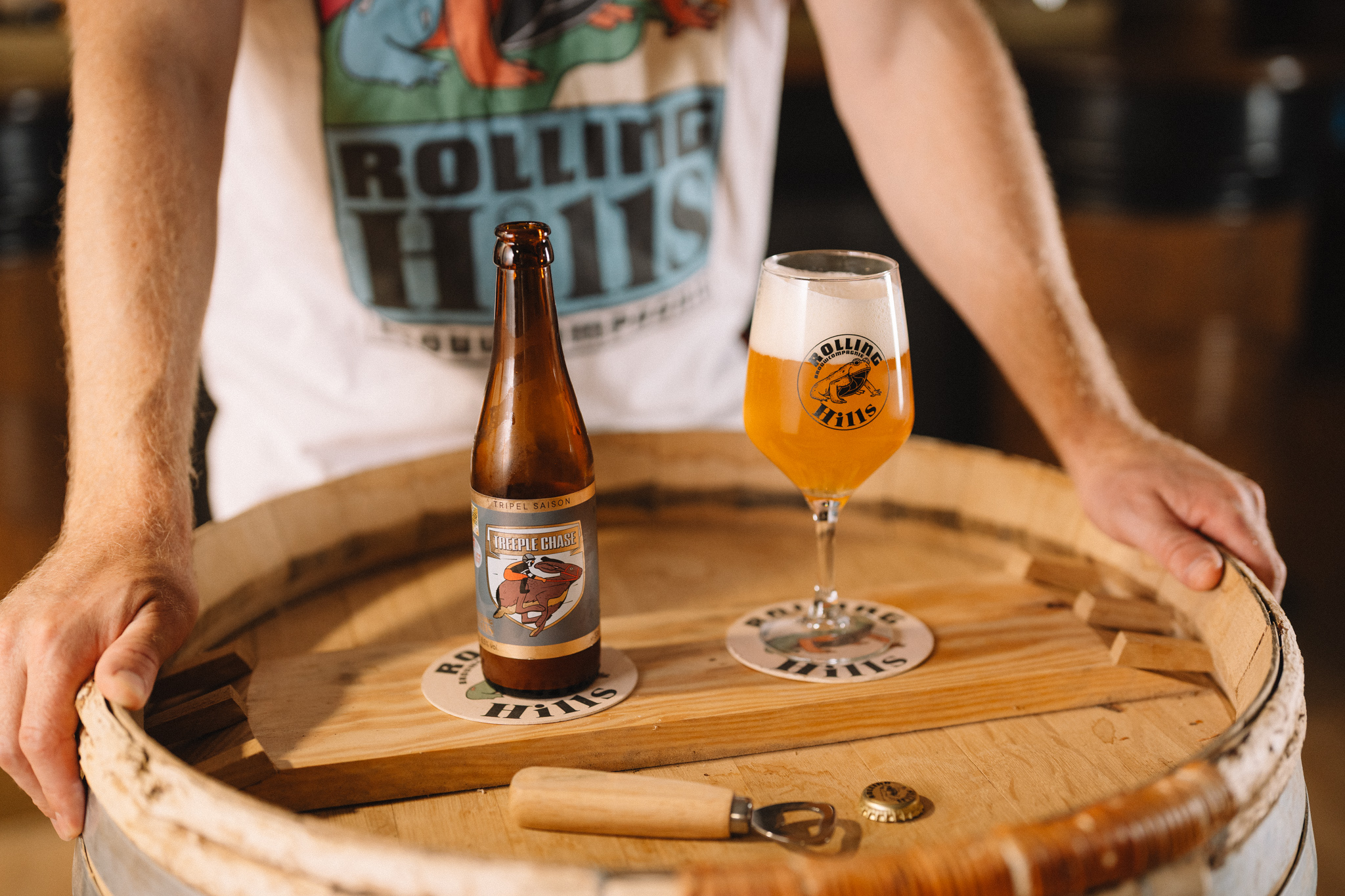
Treeple Chase, featuring an illustration of a giant hare being raced by a human jockey, is a Tripel Saison of 8.5% ABV that leans more pear than banana, drinks extremely dry (-0.3° plato), and—likely thanks to the late use of Hallertau Blanc and Nelson Sauvin hops—seems to deliver an almost white-wine profile, while maintaining the hefty heat you’d expect from a Tripel.
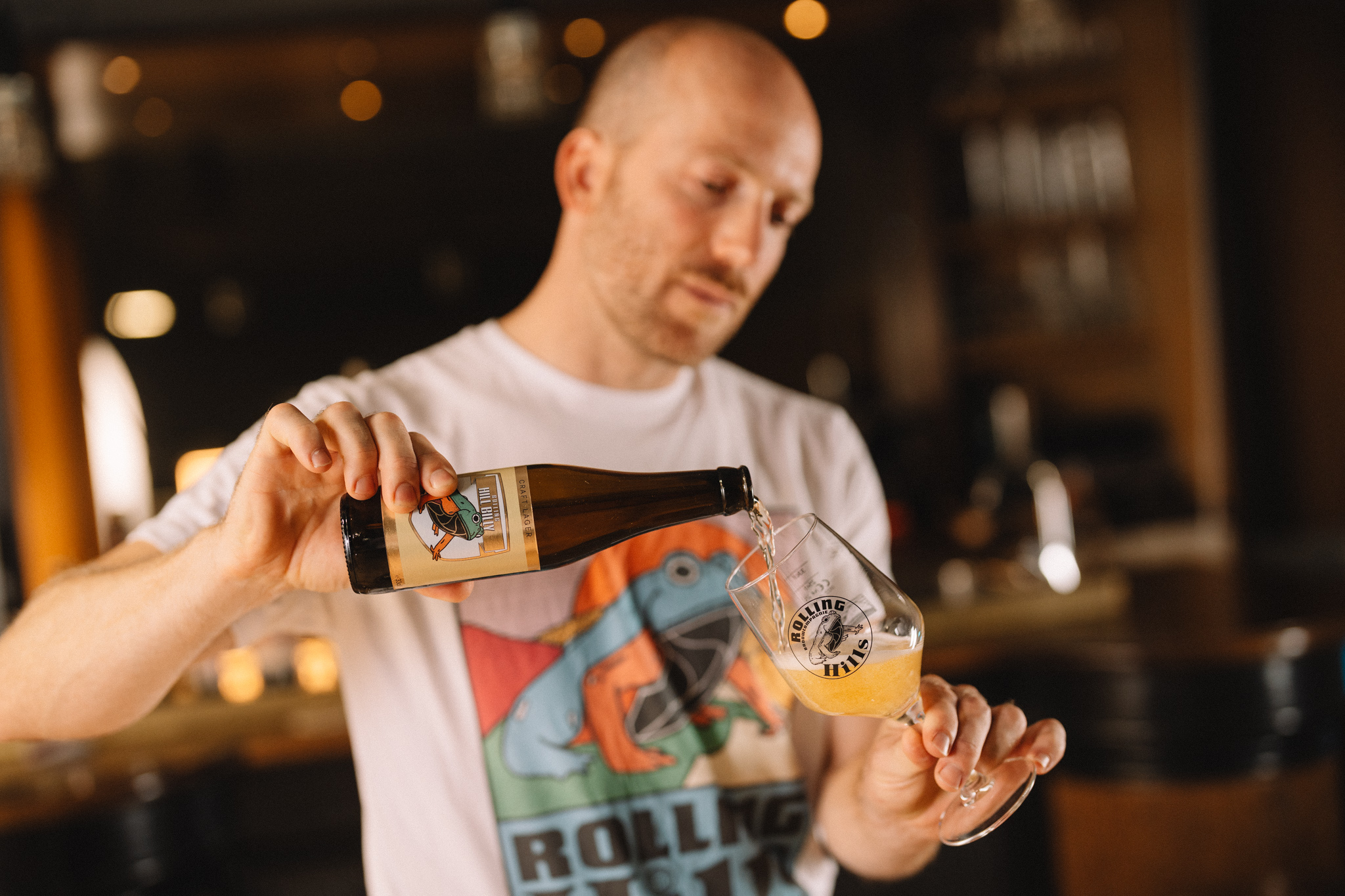
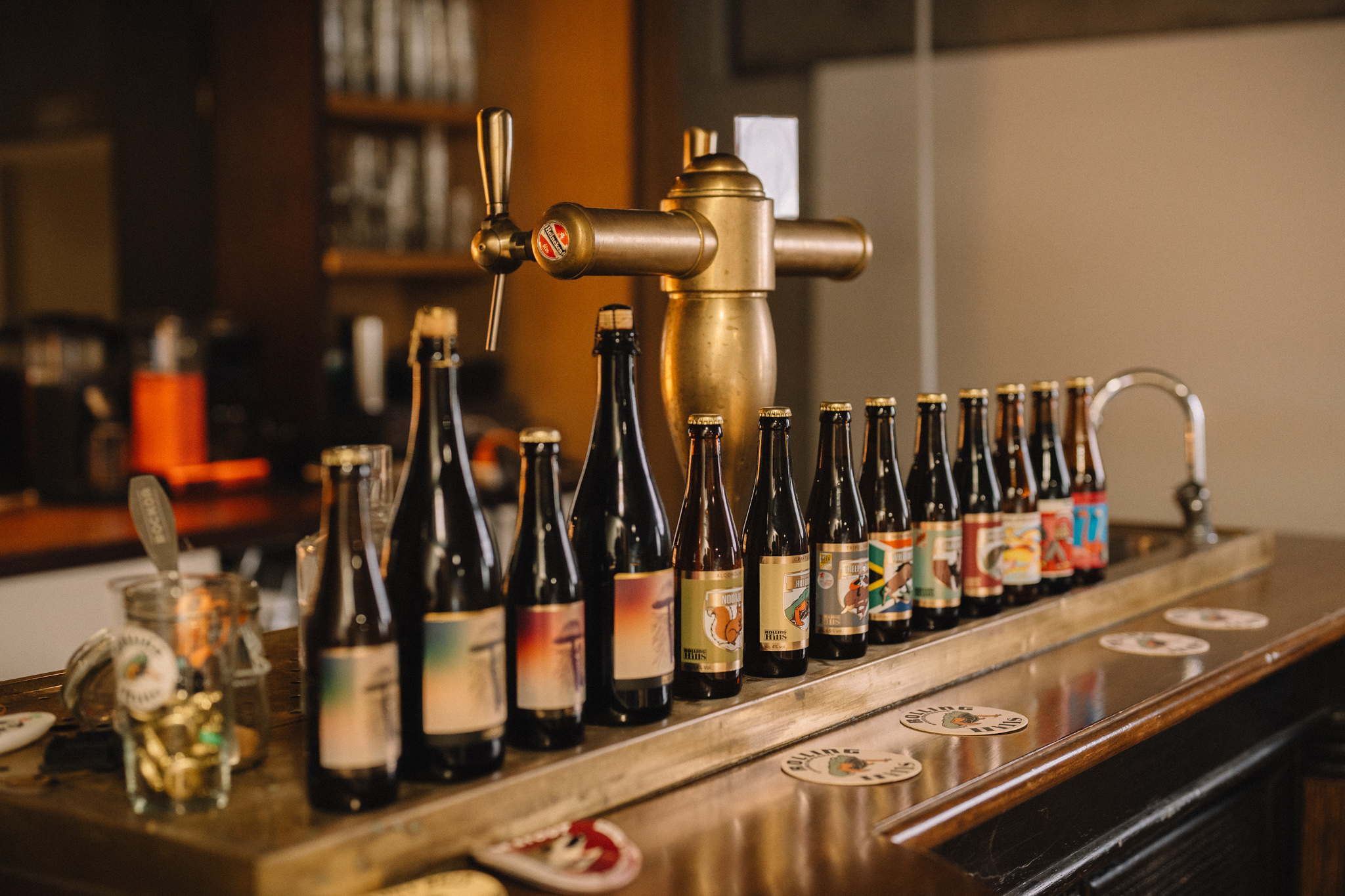
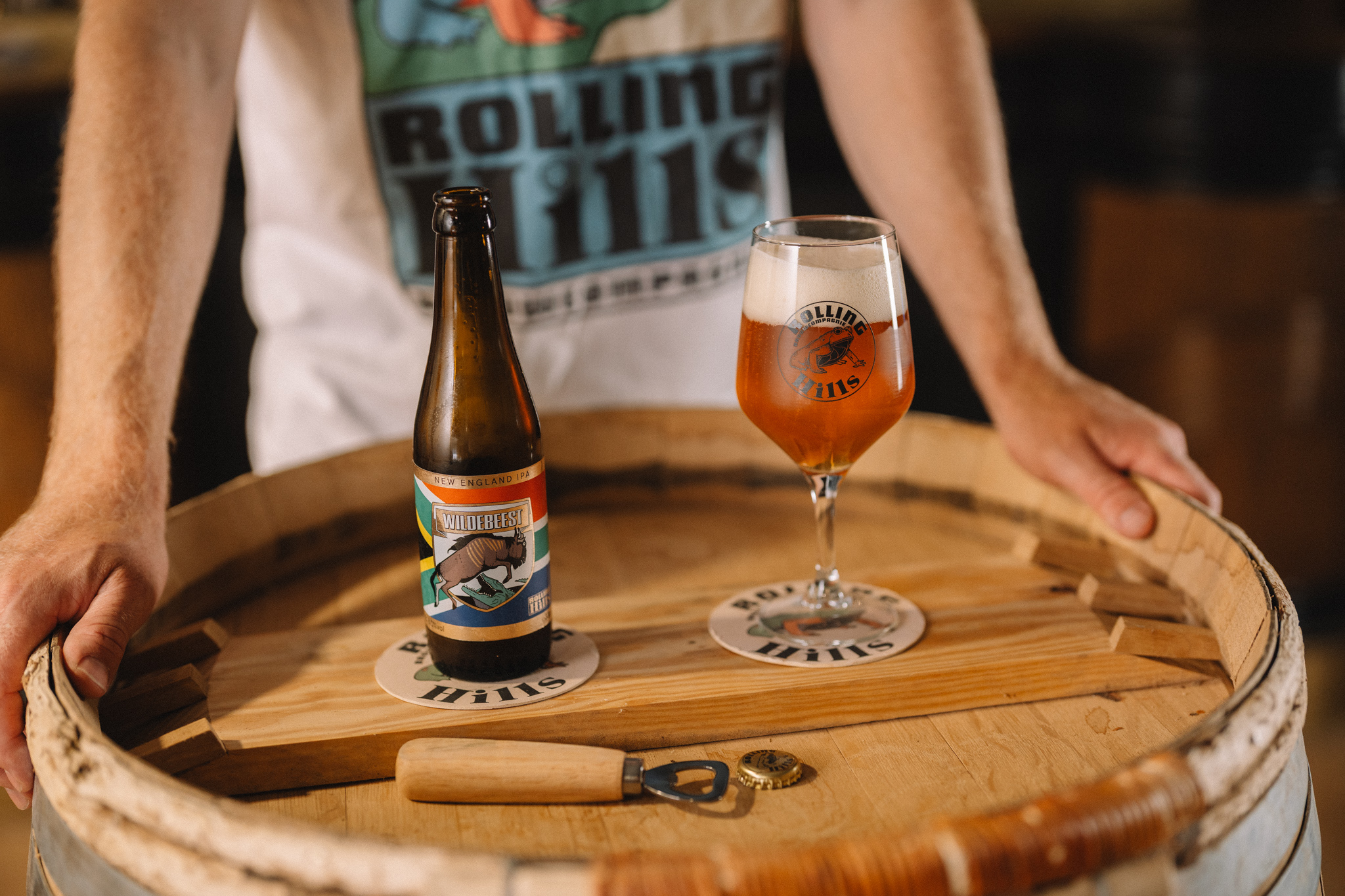
Rolling Hill Billy is a “Craft Lager” of 4% ABV, the flavour profile of which Vandermeersch describes as “clean, fruity, and citric, with a hint of granola”. Wildebeest is their IPA of 6% ABV, a very drinkable ale that showcases Talus and Sabro hops.
Filip De Stout, with the mighty hedgehog as its brand visual, is an Imperial Chocolate Stout of 9% ABV, a kind of choco-berry beer brewed with 9 different malts, Belgian chocolate, and cocoa beans that somehow manages to balance its caramel with its roastiness.
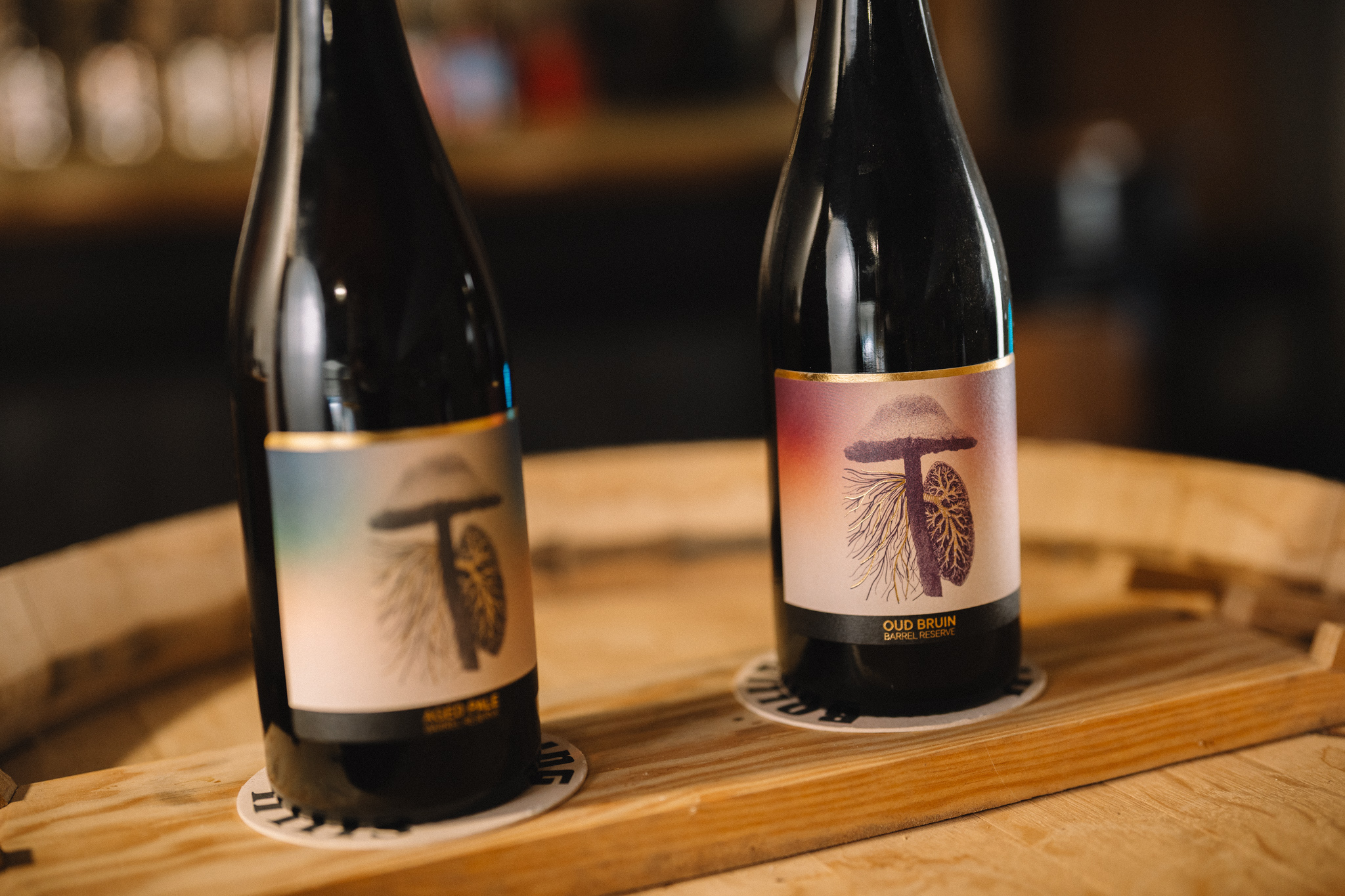
And then, there’s the Oud Bruin and the Aged Pale, mixed fermentation beers that are inoculated in stainless steel, aged in French oak, and then blended and bottle-conditioned. Featuring woodcut-style fungal illustrations on the labels and most associated with the region’s beer heritage, these are the ones I’m most interested to discover.
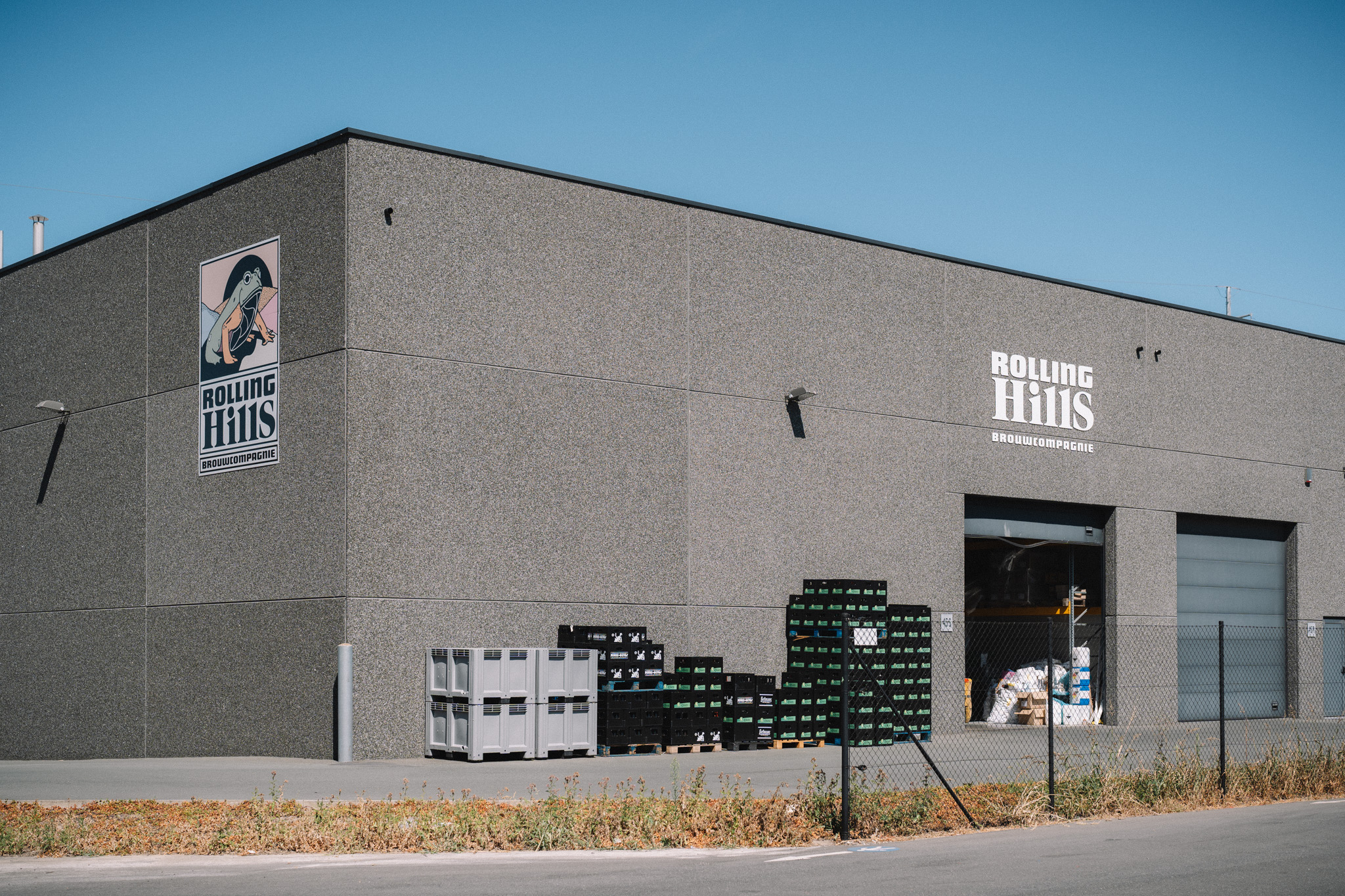
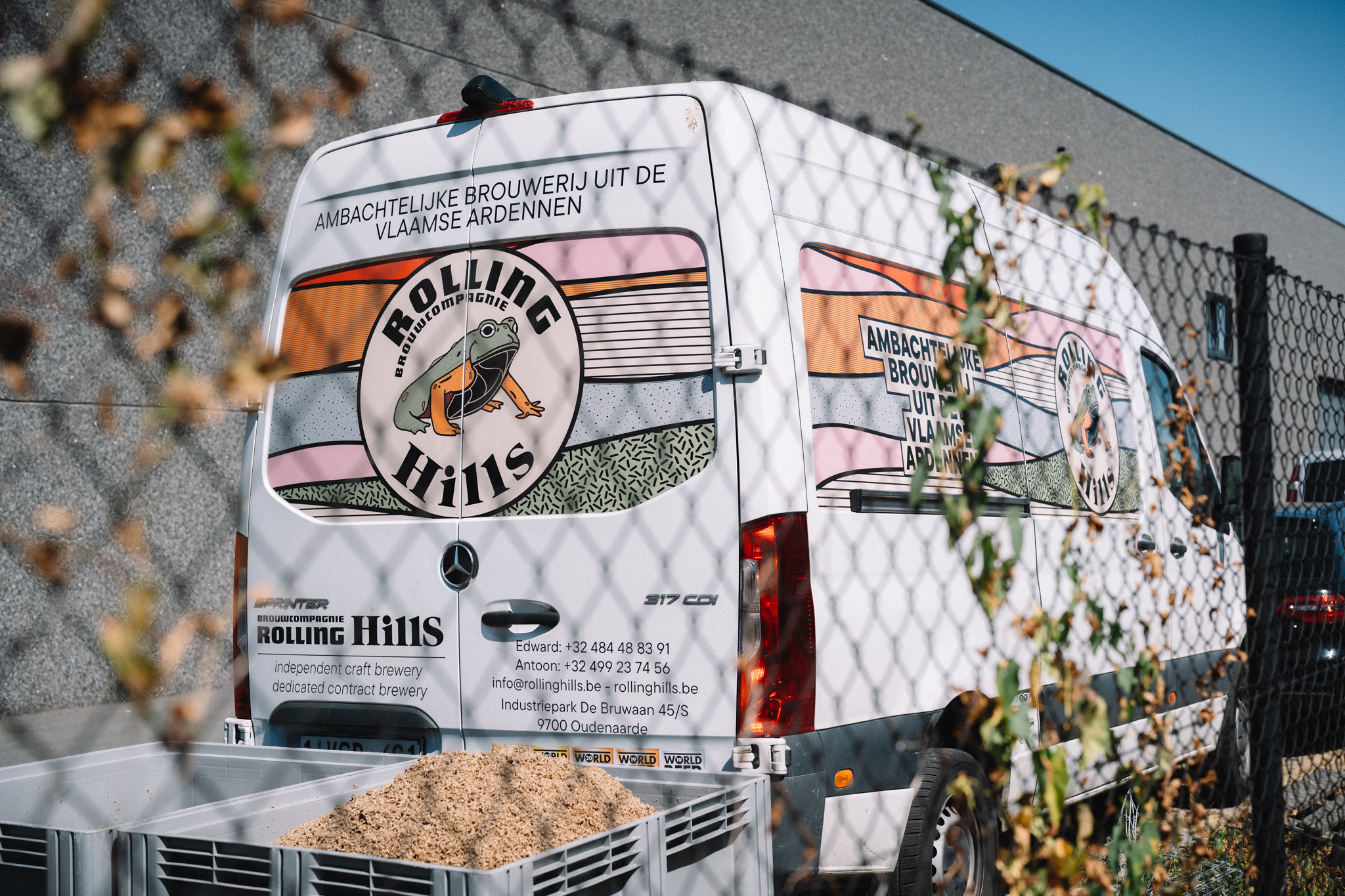
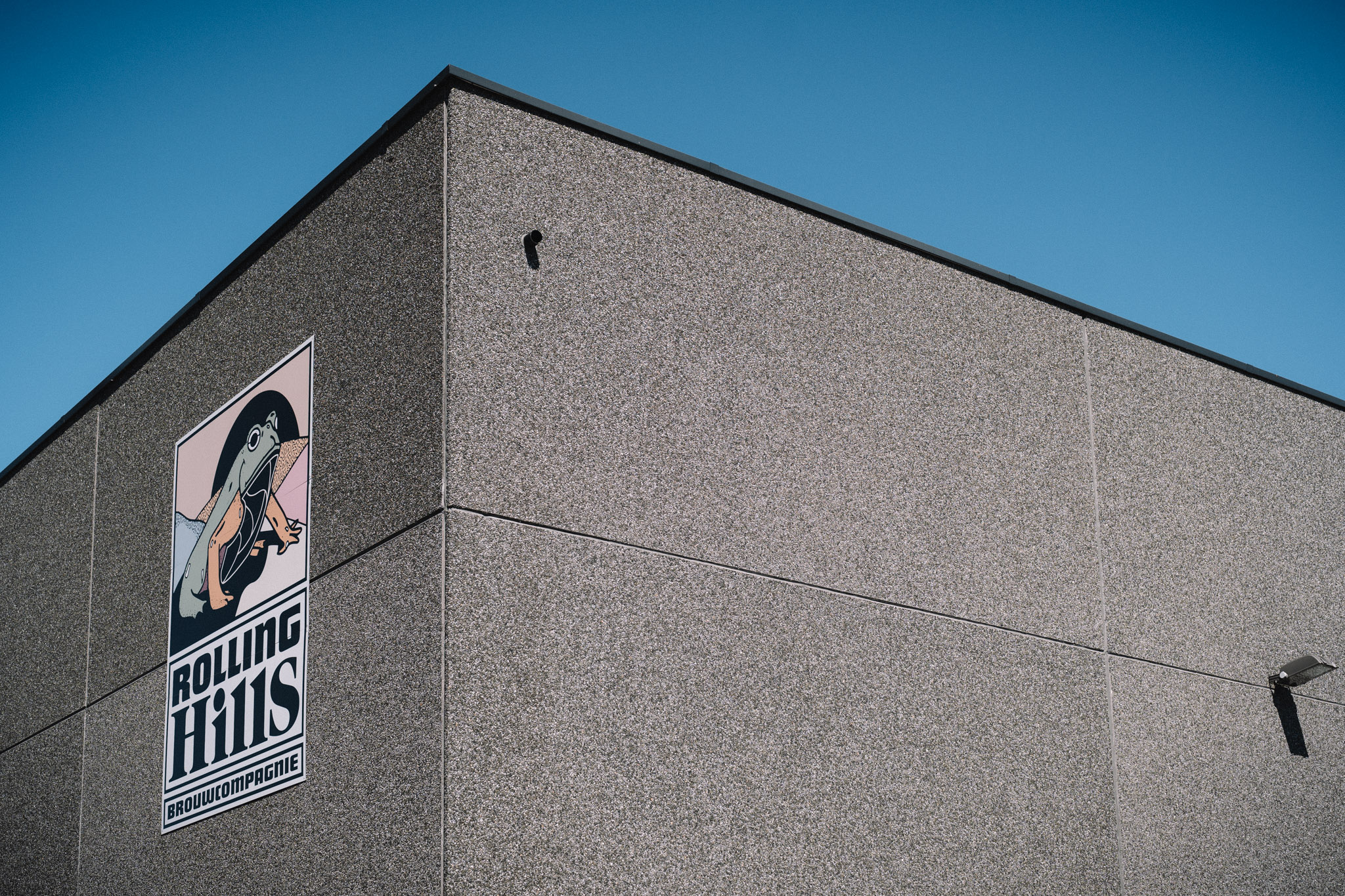
The brewery is housed in a large charcoal-coloured warehouse in a business park at the edge of the city. Its textured concrete panels are hidden by a coarse, speckled aggregate finish that flatten at the top to a slate roof. There are no windows on the building, only two industrial roller doors made of smooth, ribbed steel. Around the brewery stand other buildings of precast concrete, joined to one another by tarmacadam. One is a distribution centre for famous winemaker Jacques Thienpoint, who is Belgian but produces wine in France and distributes wine from all over the world.
The business park is a dystopian prison environment that reinforces my views on the Belgian beer world being the place where engineering pragmatism collides with romantic creativity.
All the colour lives inside.
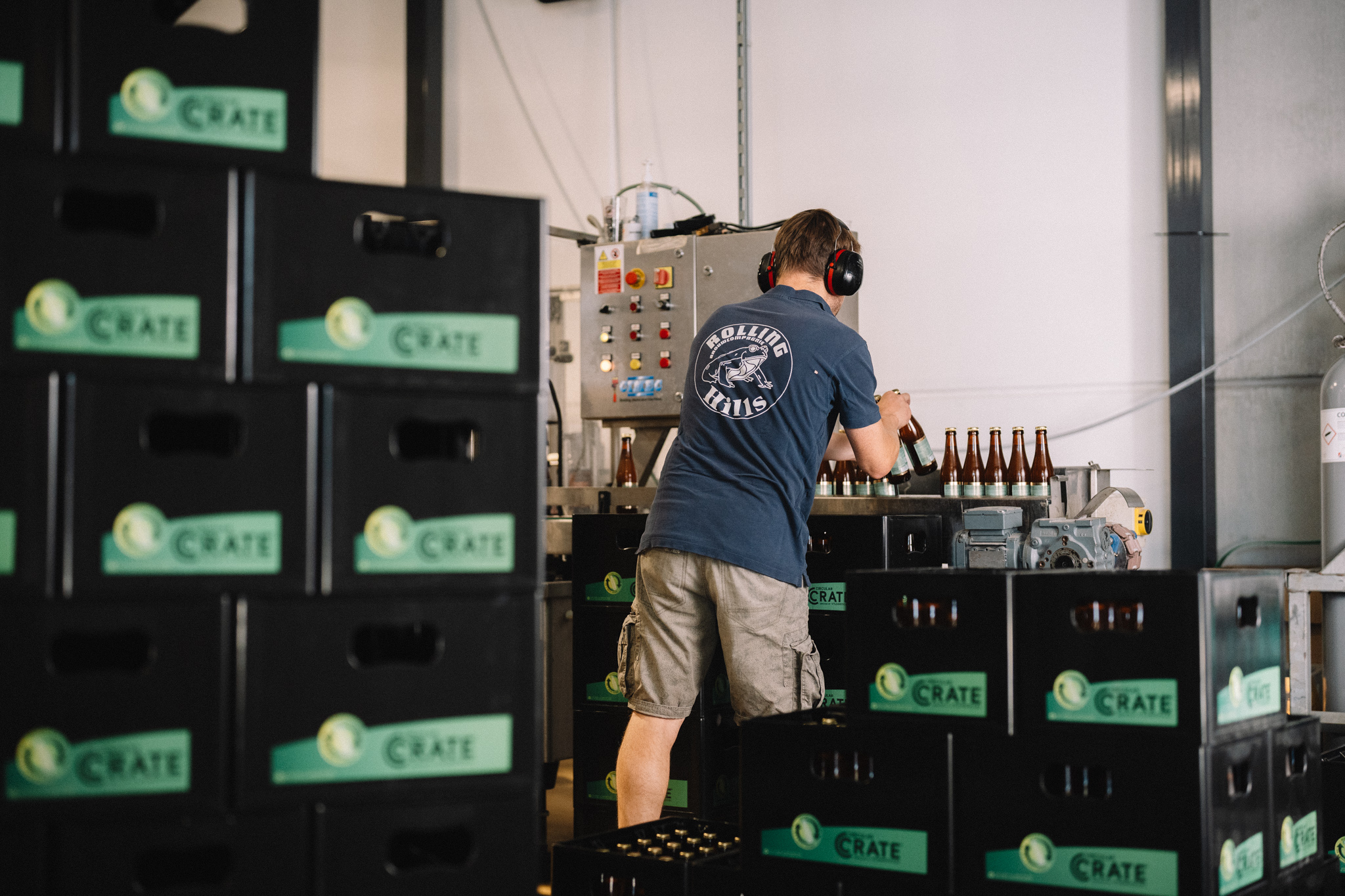
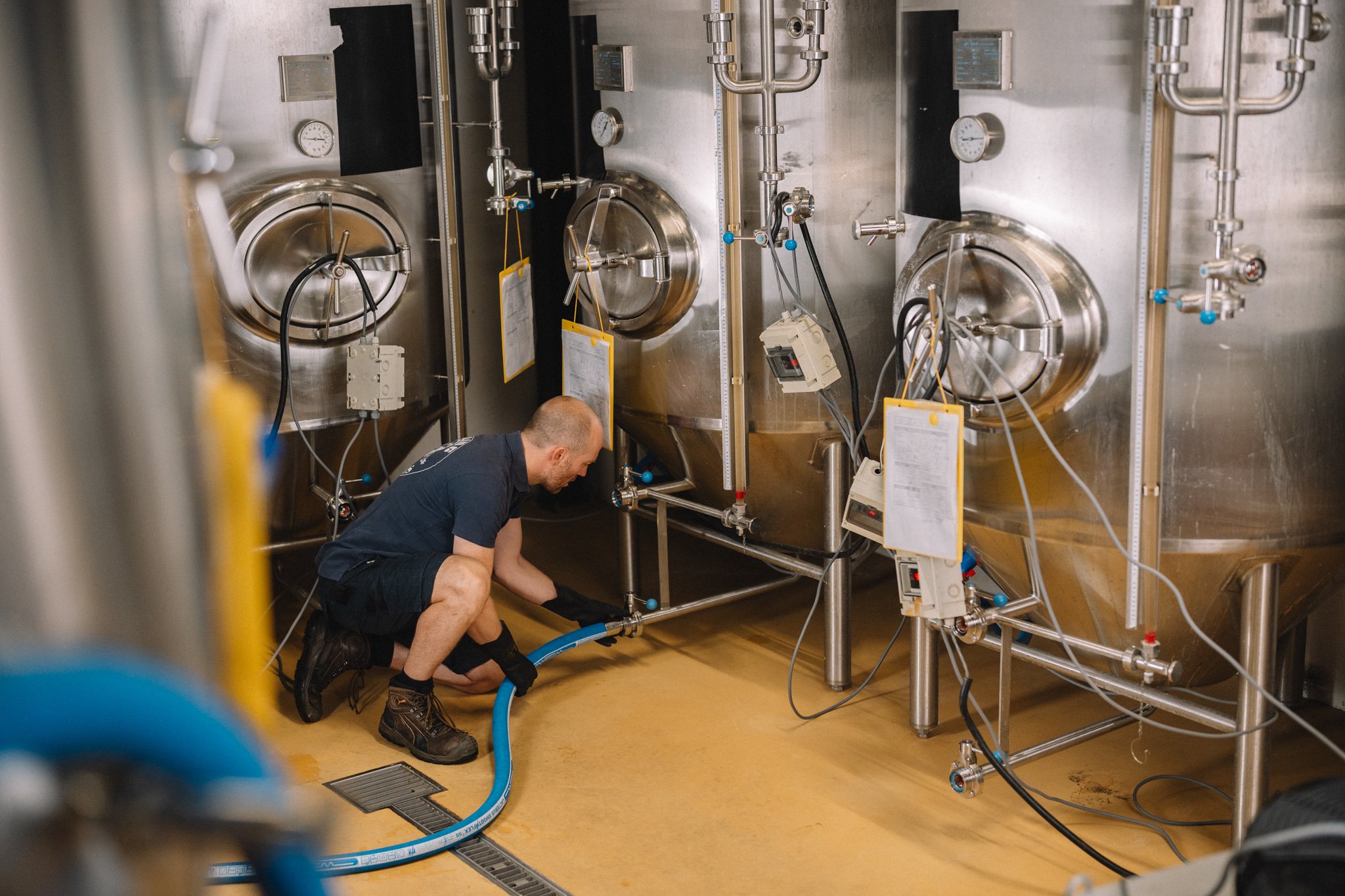
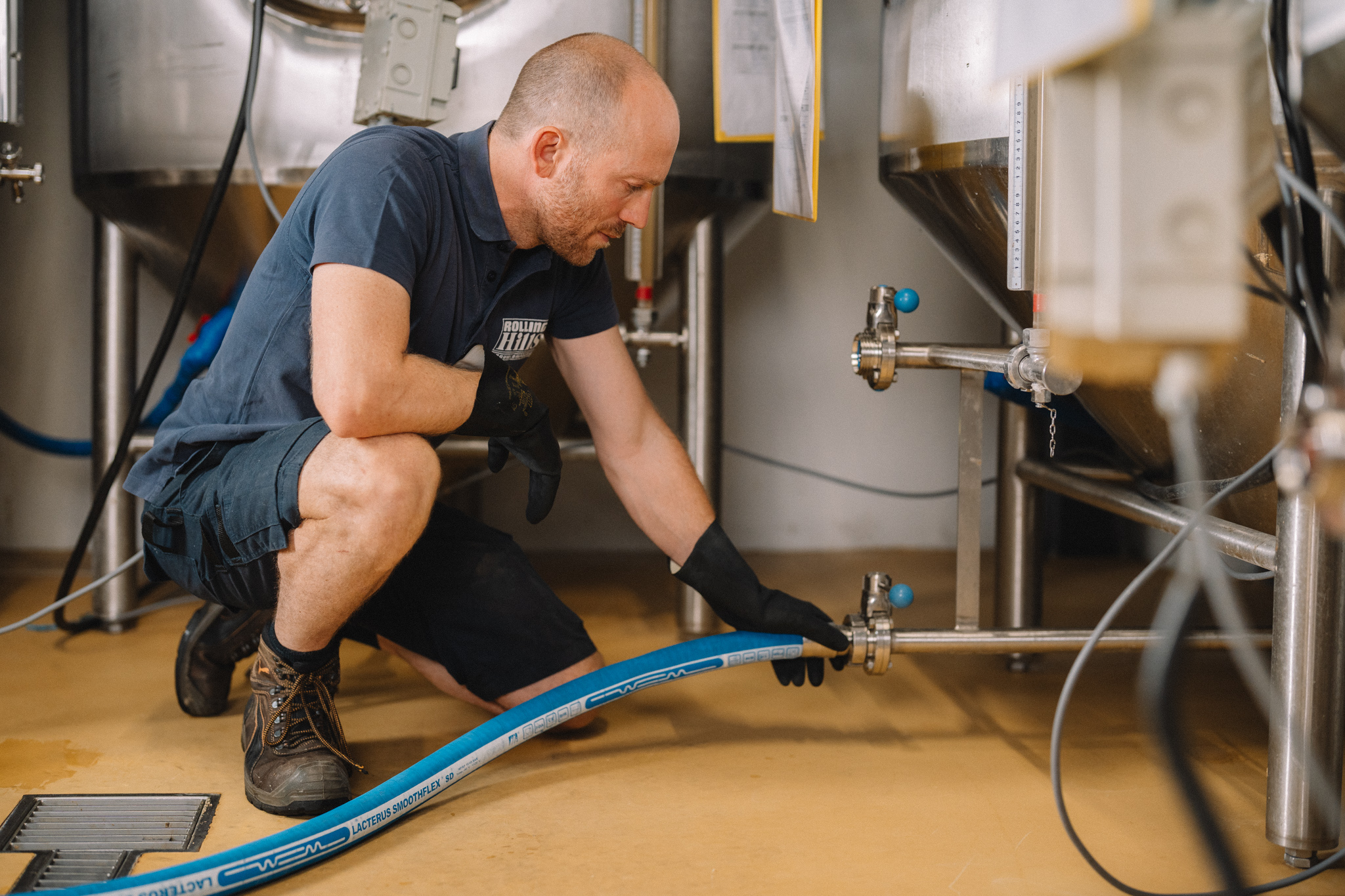
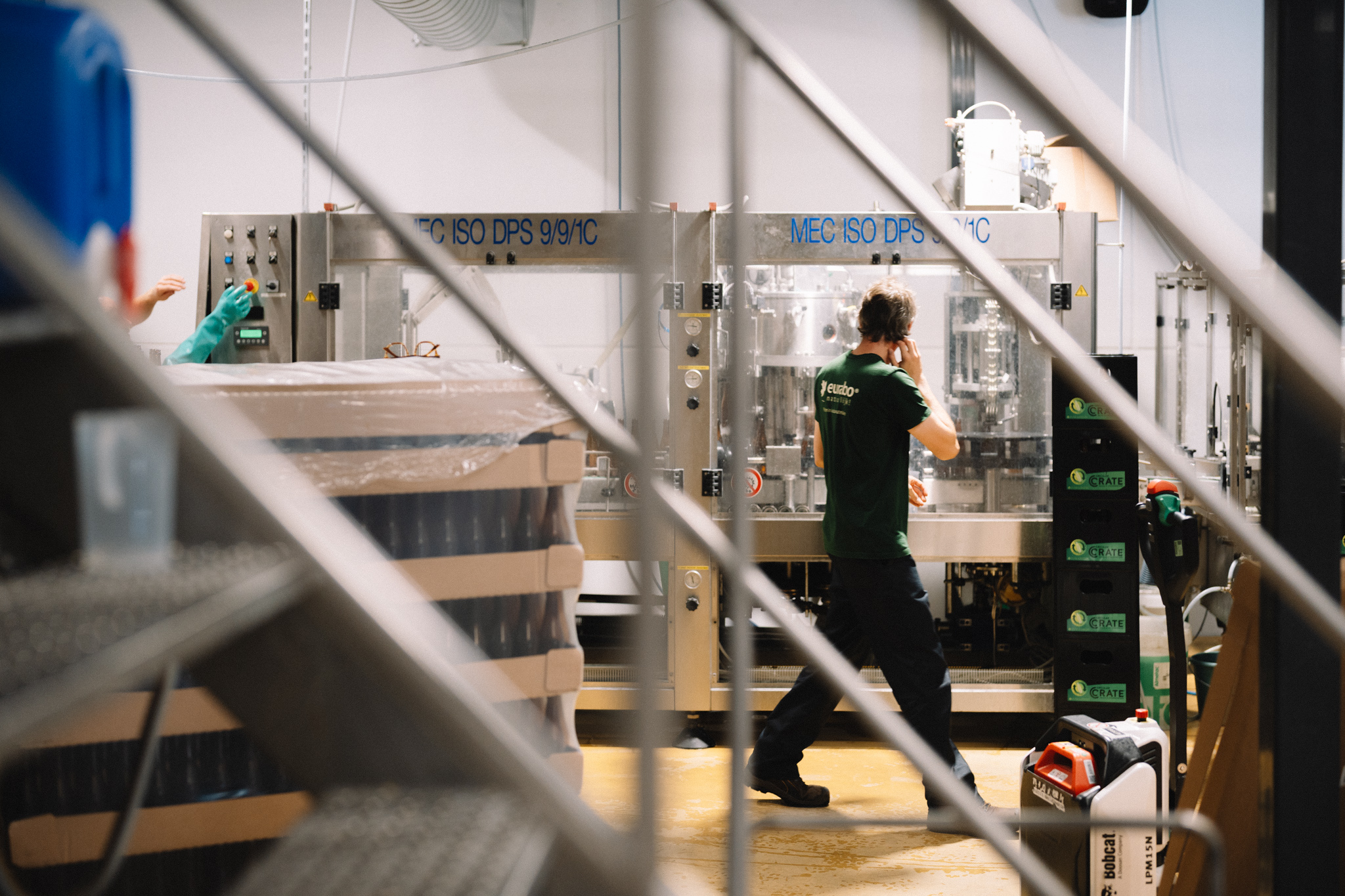
Vandermeersch is multi-tasking, hands on, the default mode of all brewer owners of small operations. He’s finishing a clean-in-place cycle of one of his CCTs, while also doing the rounds on his fermentation controls, while also receiving a delivery of bottle caps from suppliers, while also helping his brother Antoon load up some deliveries, while also answering emails from distributors on his phone, while also trying to welcome me.
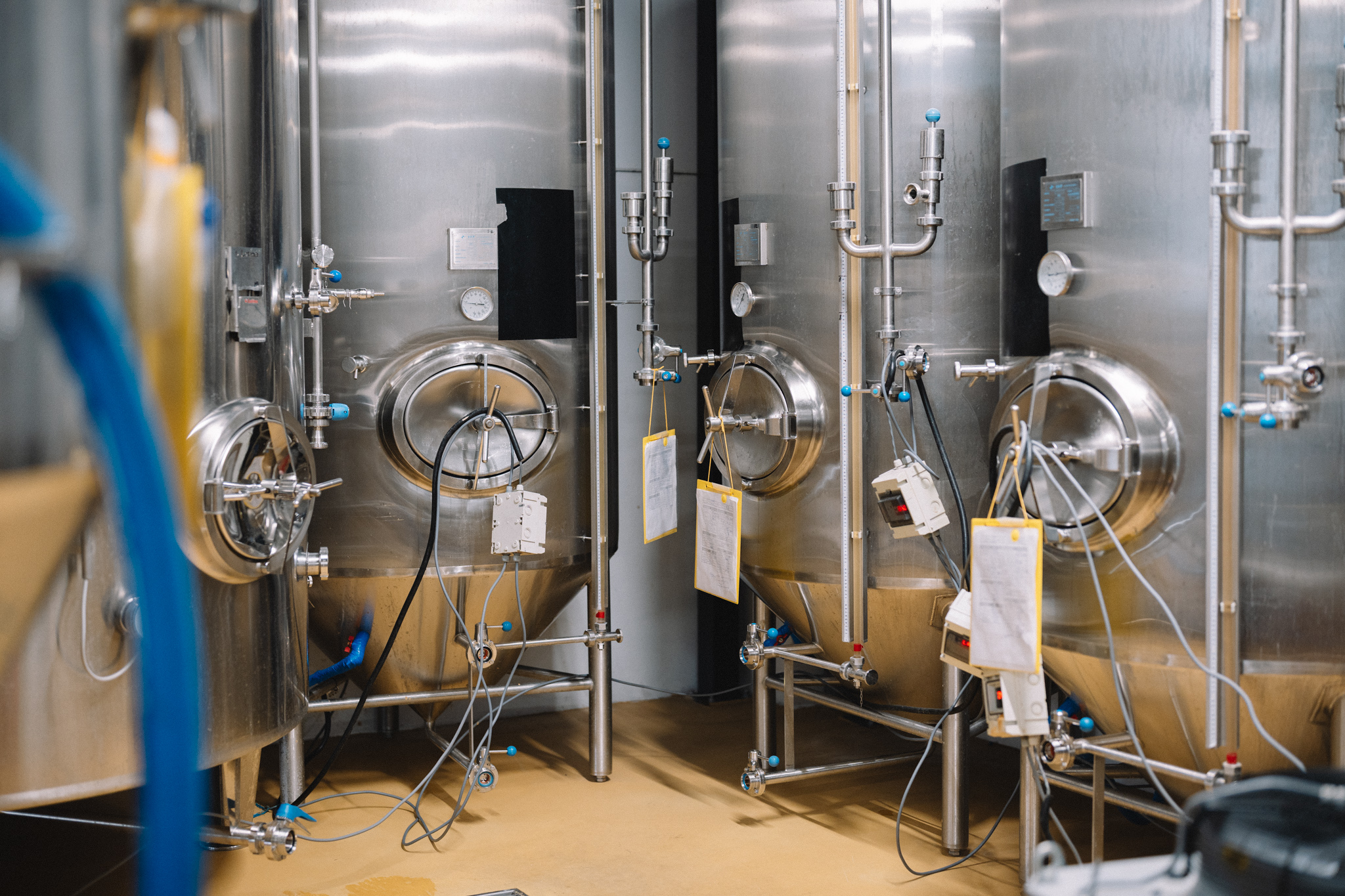
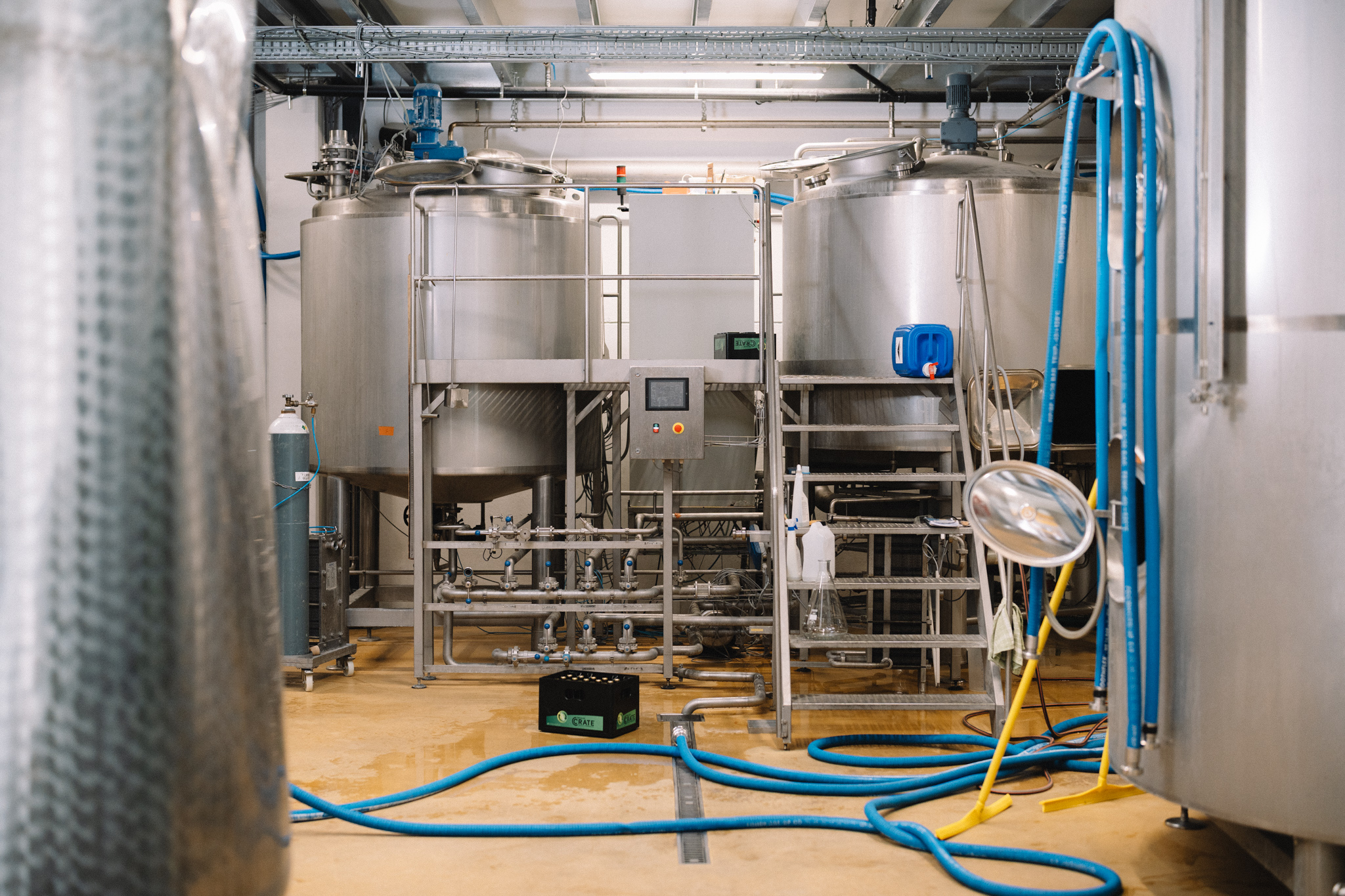
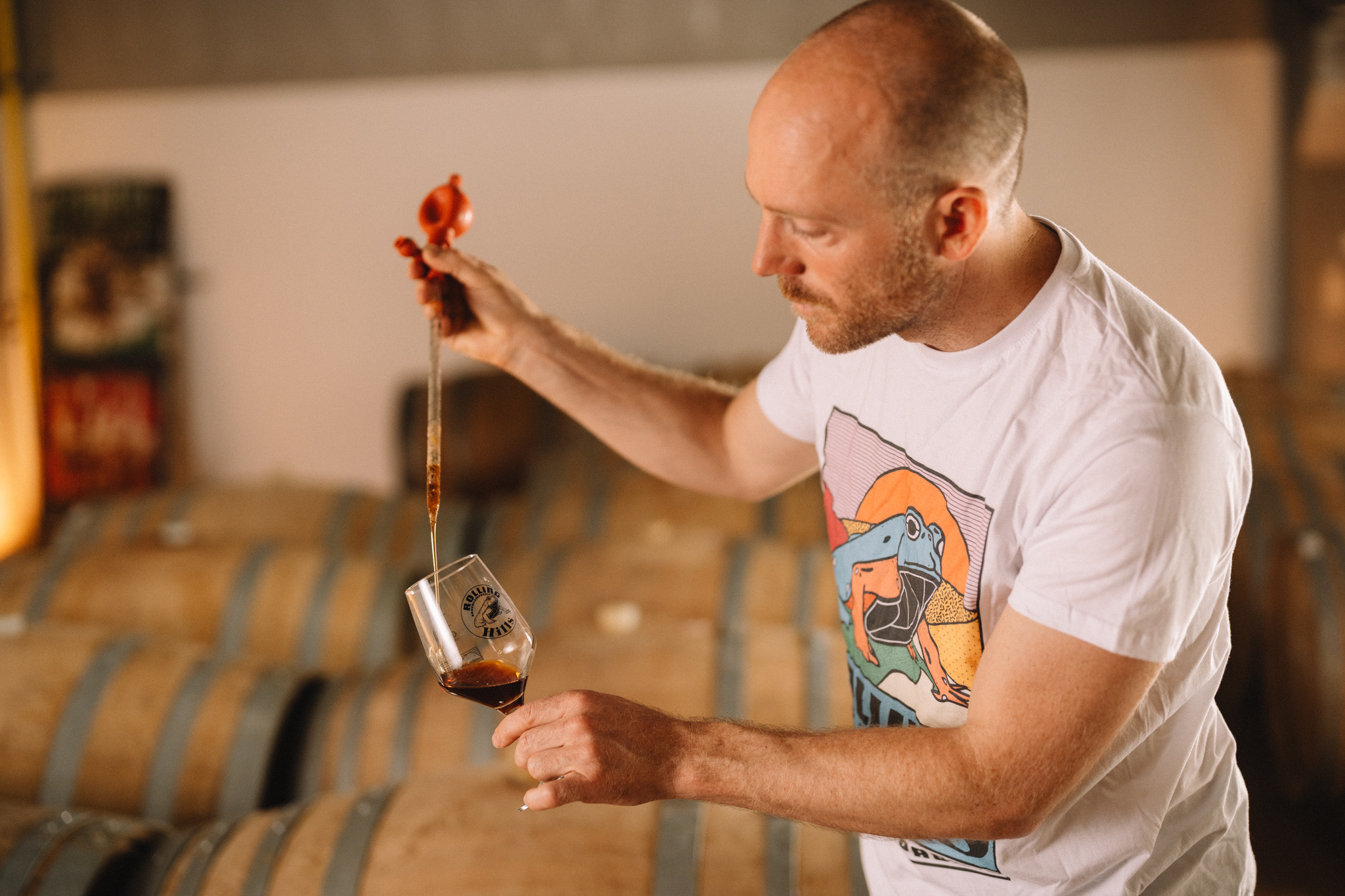
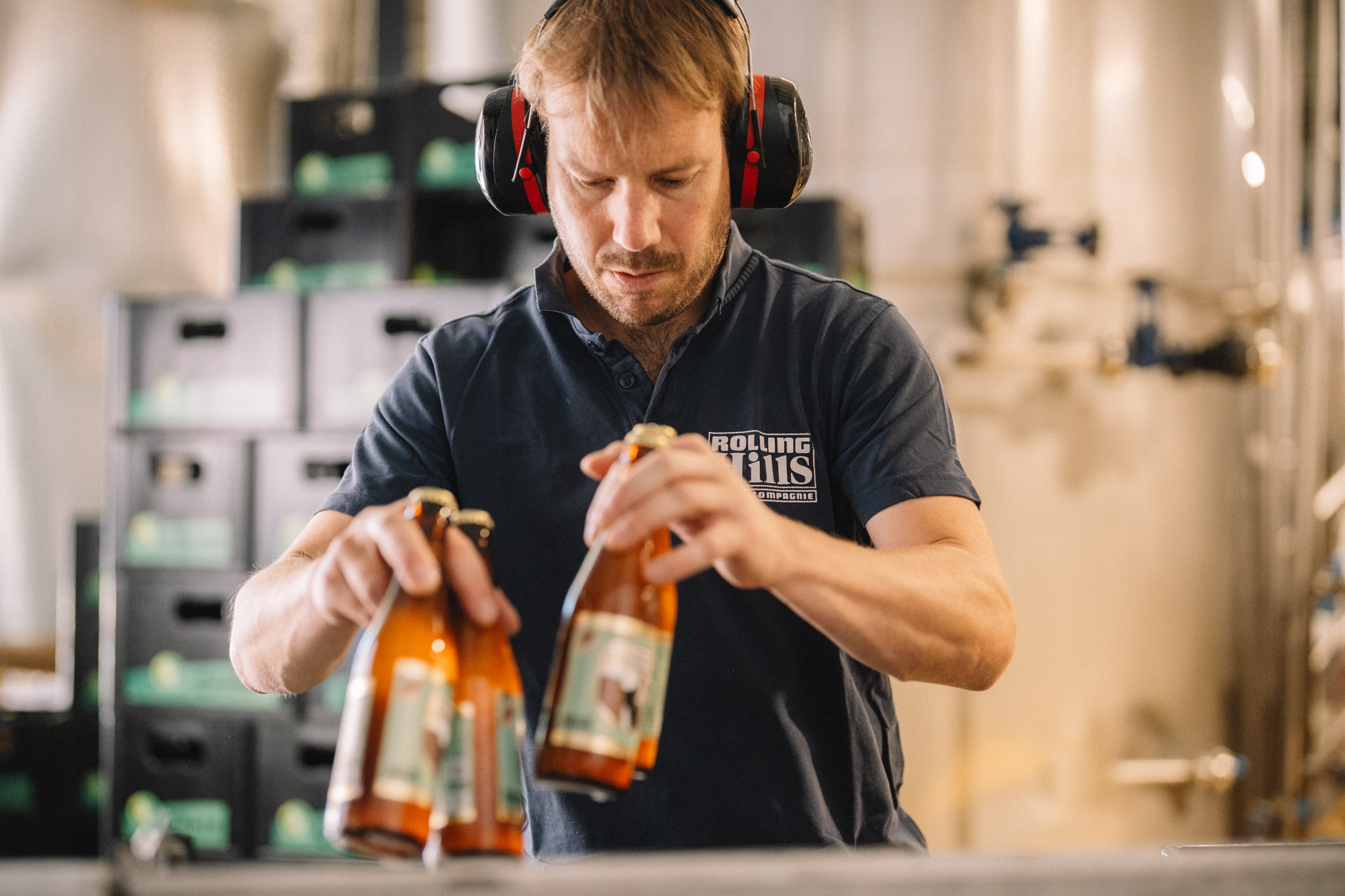
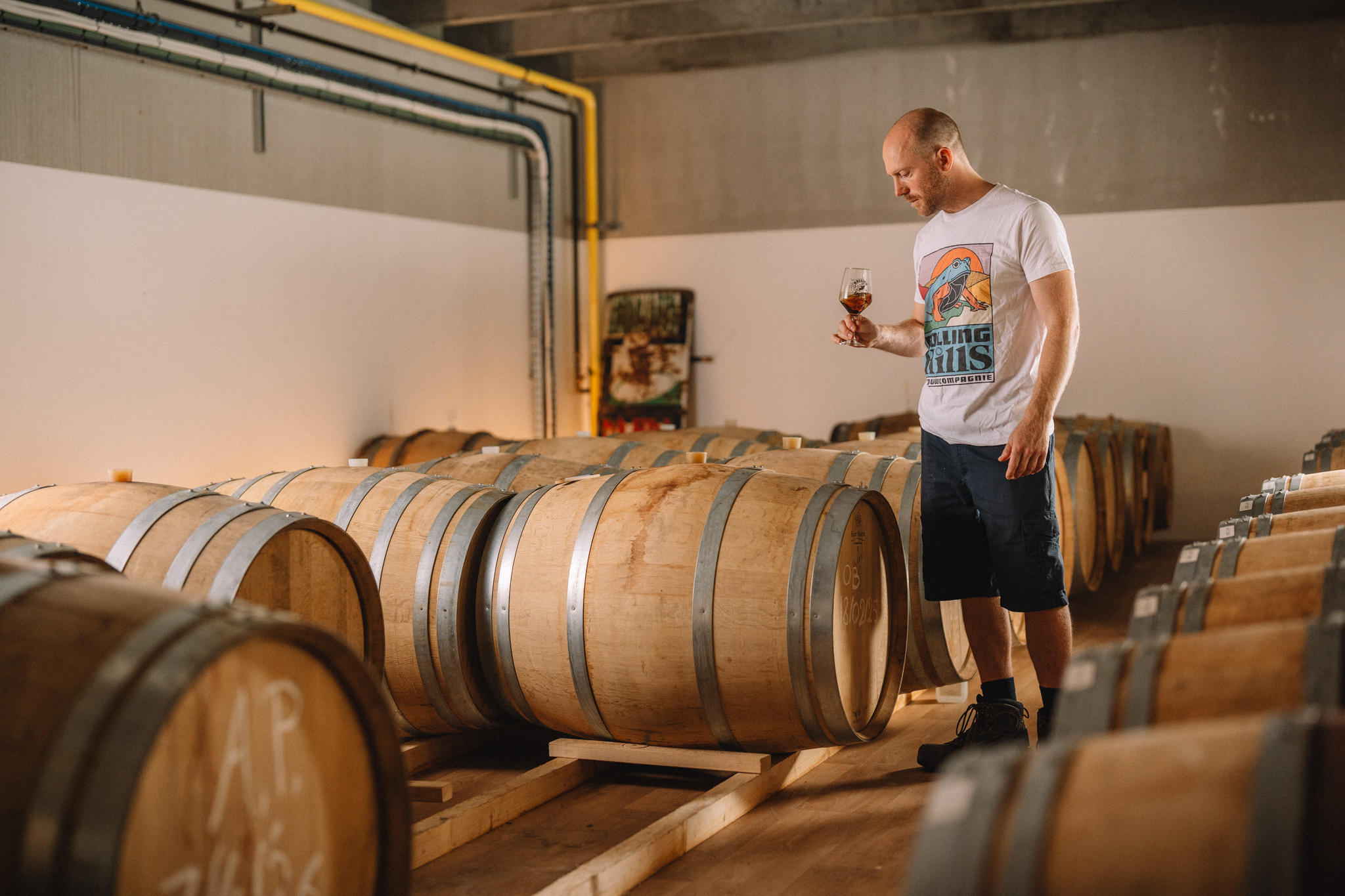
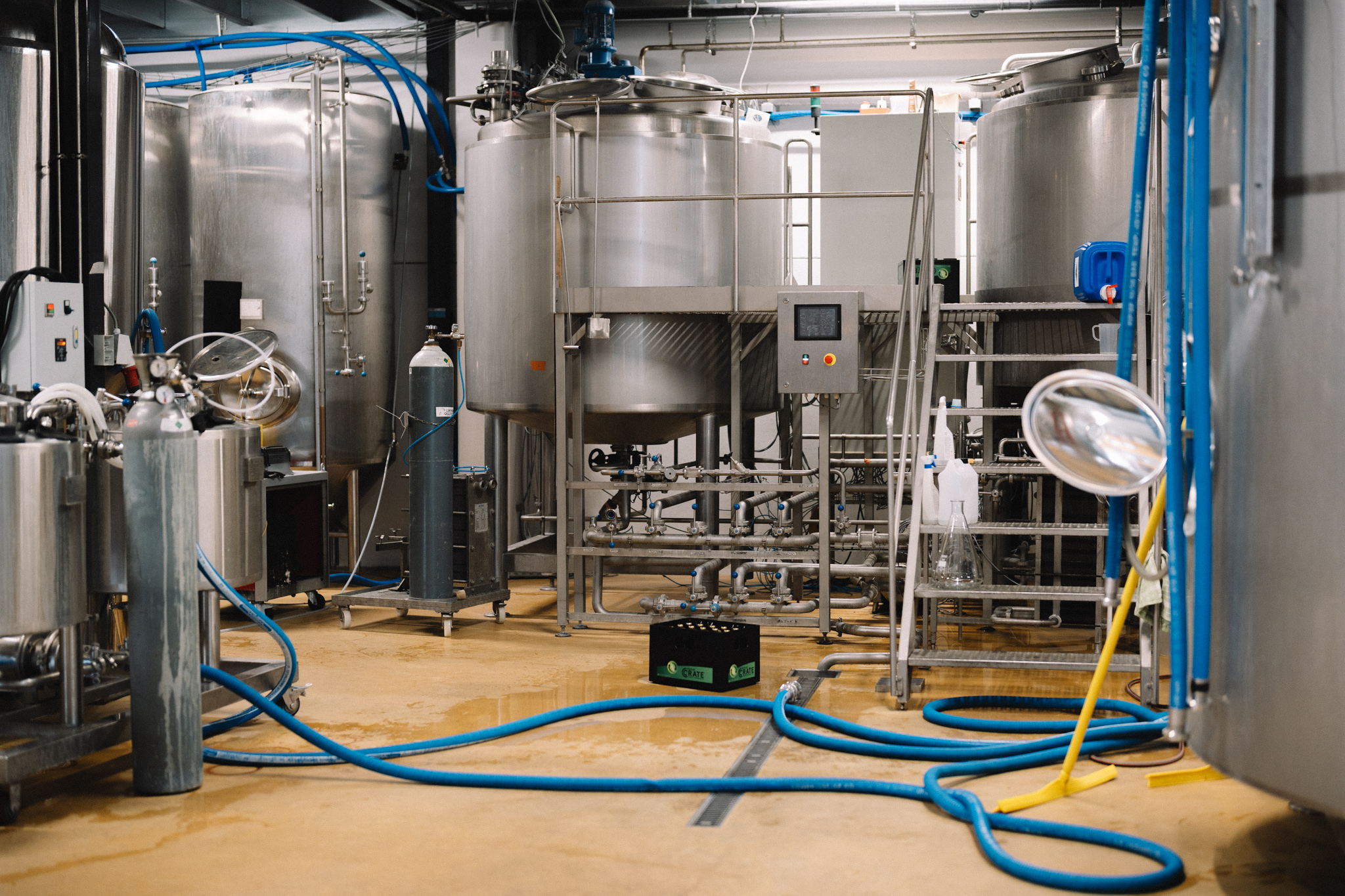
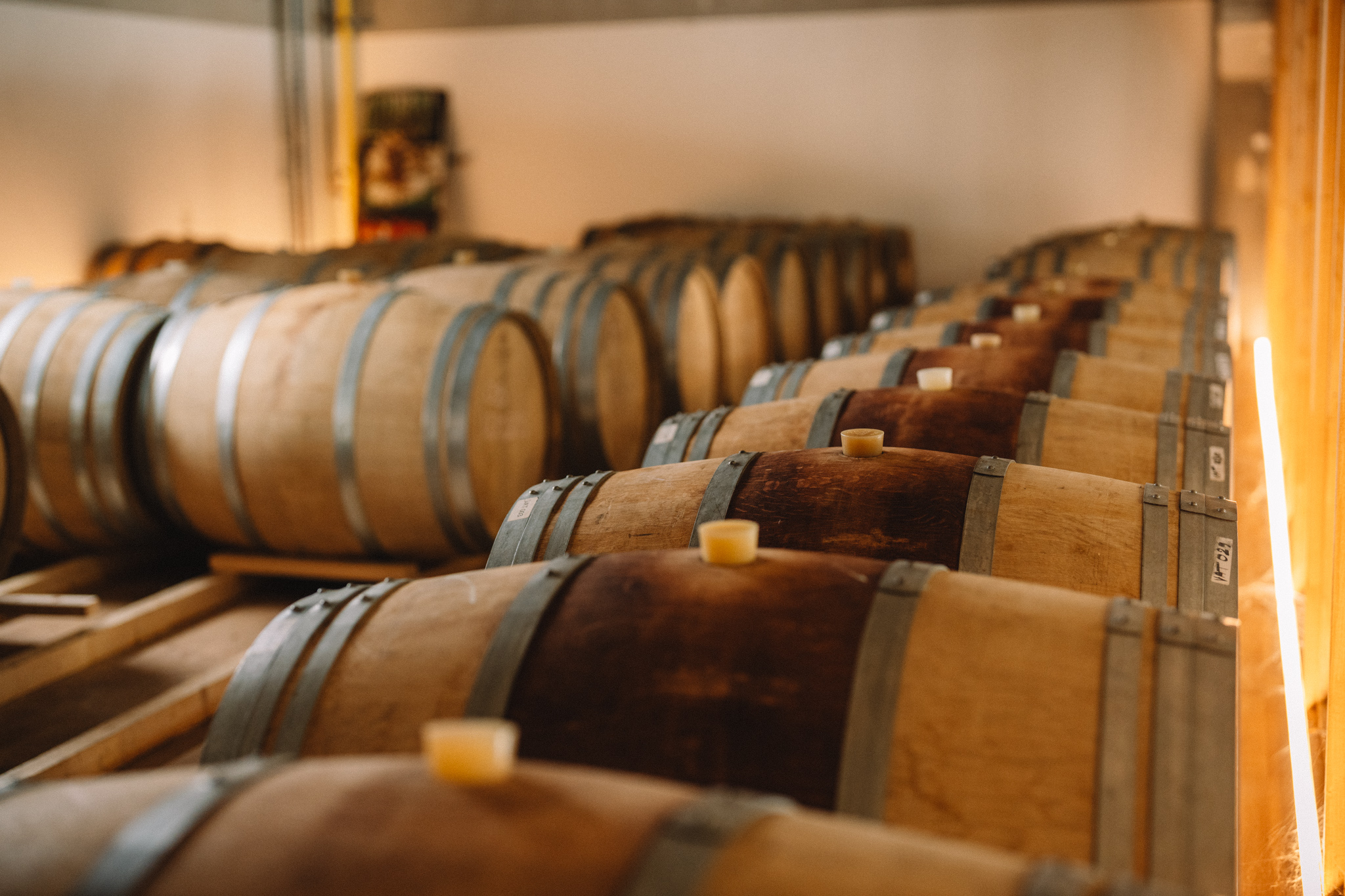
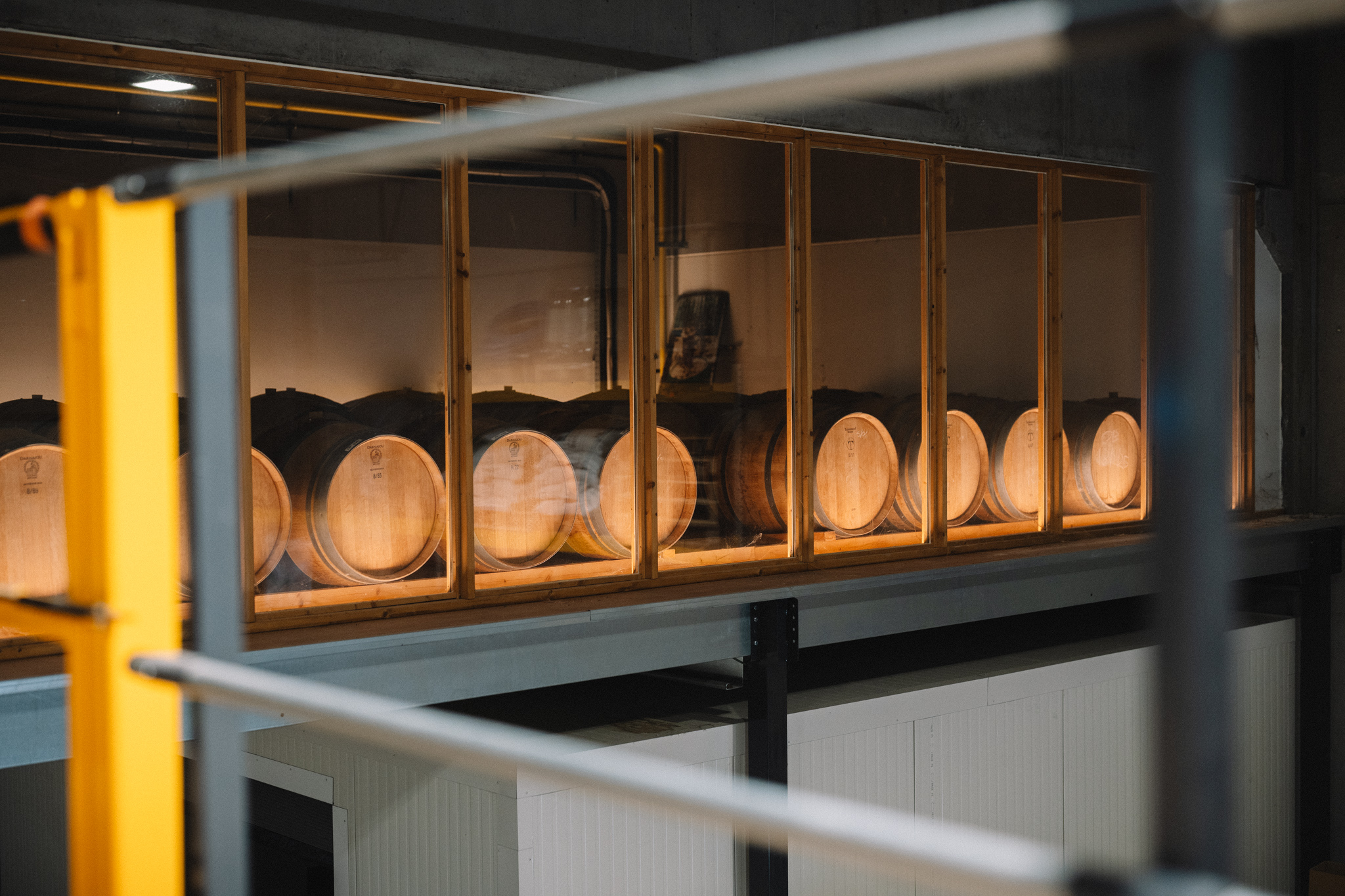
Vandermeersch is a physically fit, bald, medium-build thirty-nine year old with a tidy ginger beard, intense curiosity, and chaotic energy. He shows me around his hardware: eight 20 HL CCTs; two 50 HL flat bottom fermenters; two souring tanks and one blending tank, each of 110HL; and around 60 French oak barrels. We then move up to a mezzanine level, where I can see a small glass-encased office and kitchen to the left and a large barrel space, with windows the whole way along like we’re peering through museum glass.
Edward Vandermeersch likes to talk. Not in the “likes the sound of his own voice” way, but in the way curious, enthusiastic, and passionate people cannot help themselves. “Everyone knows that I like to talk,” he admits. He goes off on a bullet train of opinions about the plight of global sustainability. At one point, he drops a glass which smashes all over the floor, and for the entire fifteen minutes or so it takes him to clean it up, he continues talking to me about the difference between European and North American political culture.
Selfishly, I’m here to learn about Oud Bruin and to learn about this part of Belgium and to learn about pursuing challenging creative endeavours in the face of uncertainty and to maybe even learn how to deal with big, scary changes in life that you didn’t ask for or expect, and I very quickly realise that I’ll learn about all those things from Edward Vandermeersch. All I have to do is listen.
*
III.
Father and Son
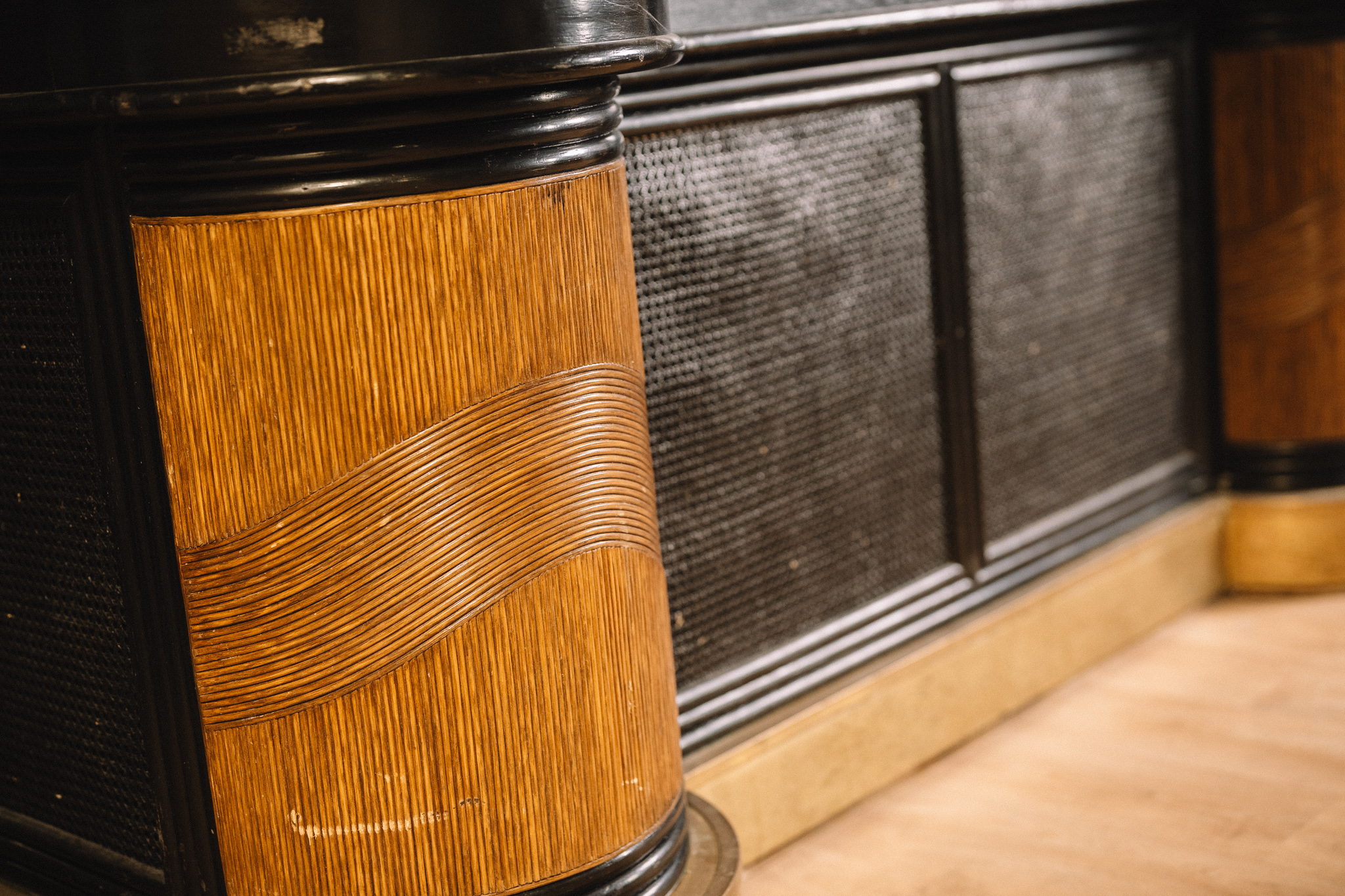
In the centre of the mezzanine of the Rolling Hills brewery is a reception area. Pride of place is a beautiful old Art Deco bar with honey-toned pencil reed rattan, black lacquered wood, and brass-fitted dispense. Vandermeersch says that he picked it up at vintage hospitality wholesaler, Tinus Toog. It’s one of many throwbacks to brewery history here: enamel signage from old brands, mirror paraphernalia, the bespoke glassware of long-retired brands.
One of Edward Vandermeersch’s best friends growing up was Emmanuel Pêtre, a descendant of the iconic Oudenaarde brewery, Petre Devos. “It was one of these beautiful old monumental breweries that you could compare to Liefmans,” says Vandermeersch. “They made similar products. The 1930s were the high days of Liefmans, but also of Petre Devos. Emmanuel’s grandfather was Louis Pêtre, one of three brothers who were the last brewers of Petre Devos.”
Petre Devos produced beer between 1899 and 1970. It’s well-known in the region, but also in international beer-loving circles. A bizarre representation of this is its appearance in the US sitcom “The Big Bang Theory”. An historical poster from the Belgian brewery hangs in the apartment of one of the main characters and can be regularly seen in the background on-screen.
Like the other Oudenaarde breweries of yesteryear, Petre Devos specialised in mixed fermentation beers. But they brewed a clean ale as the base beer for their Oud Bruin, “Courant Oudenaards”. “They couldn’t sell it,” says Vandermeersch. “But it was available for staff within the walls of the brewery.” For a while, Rolling Hills sold an interpretation that they called “Courant”, a traditional dark ale brewed with raw wheat. It’s since been discontinued. It does, however, still serve as the base for their own Oud Bruin.
Vandermeersch’s father, Pieter Vandermeersch, was best friends with Emmanuel Pêtre’s uncle, Henri Pêtre, and the pair grew up around the Petre Devos brewery. ”They were born on the same day and they were inseparable,” says Vandermeersch of his father and his friend’s uncle. “When they were 13 or 14 years old, they would hide away in the attics of the brewery with the other older cousins of the Pêtre family to drink beer.”
Vandermeersch talks of “a personal mythology” surrounding the Petre Devos brewery that was passed down to him from his father. “Oudenaarde was a very old-school Catholic Flemish city, like an old world that does not exist anymore,” says Vandermeersch. “And they would just break free from that inside the brewery and across the rolling hills of the Vlaamse Ardennen.” When Vandermeersch went to bars around Oudenaarde with his father, he would see the old Petre Devos panels on the café walls and hear stories about their beers. The stories they heard from their father about Petre Devos inspired Vandermeersch and his brothers to homebrew as teenagers.
Edward Vandermeersch’s father was a complicated man. In an article with Belgian broadsheet De Morgen in 2023, Vandermeersch’s sister Charlotte Vandermeersch was open about the challenges of growing up with their father. “When he was present, he was prone to incredible outbursts of rage, making life extremely unpleasant for us at times,” she told De Morgen. “He was held in high regard by many—an articulate, witty man—but he had a dual nature. That was often difficult for my brothers and me. Beneath all that anger lay a sensitive, deeply troubled soul. Today, someone like him would receive support from an early age, but back then, neither the resources nor the understanding existed for that.”
Edward Vandermeersch and his siblings were creative and entrepreneurial and thrived as they went their own ways.
Vandermeersch’s sister Charlotte would go on to become a famous actress and screenwriter in Belgium, known for award-winning films such The Eight Mountains, Loft, and The Broken Circle Breakdown. She is married to Felix van Groeningen, a Belgian director who has worked with actors including Steve Carrell and Timothée Chalamet.
Vandermeersch’s brother Karel studied economics at Ghent and Vlerick. When he was 10 years old, he bred rabbits and sold them. “He’s always been a very business-minded guy,” says Edward Vandermeersch. “On one occasion, one of his rabbits escaped and bred with wild rabbits, and soon the whole place was crawling with these wild creatures.” Karel is now Managing Director of Vanden Avenne Commodities, co-owner of Refuge Kapelleberg, and a member of the board of directors of three energy companies based in Belgium and the Netherlands.
Youngest brother Antoon became a keen sportsman, dabbled in handyman work, and helped organise music festivals. For years, he was helping out with the commercial relationships on which Rolling Hills brewery was built, long before he became an official co-owner.
In 2012, their father Pieter Vandermeersch passed away at the age of 61.
“He died from acute liver failure after a long period of very poor lifestyle habits,” says Vandermeersch.
Edward Vandermeersch was twenty four years old at the time. And in a sea of grief and professional uncertainty, he decided that he was going to devote his time to make a beer that celebrated where he and his family were from.
*
IV.
The Resistance
If this visit is the third time I meeting Edward Vandermeersch, the first time was on a visit to Brouwerij ‘t Verzet in Anzegem in 2016 when I was interviewing ‘t Verzet owners Alex Lippens and Koen Van Lancker for a story that would appear on a US beer website.
In Vandermeersch, I saw a young guy running around performing gravity readings and preparing to dry hop. During a brief introduction, the young guy told me that he was reviving an old Oudenaarde brand, and that the first of these beers was about to be launched into the market. I walked away thinking that it was an interesting project from a young entrepreneur who seemed somewhat tired, stressed, and chaotic (I believe I could recognize this easily because I was also tired, stressed, and chaotic at the time myself).
Vandermeersch and his brother Karel had set up a bierfirma (a beer company without its own brewing facility) the previous year with their friend Emmanuel Pêtre, the descendant of the Petre Devos brewery. Their brand would lean on the history of the old Petre Devos brand and they would have their beers brewed at ‘t Verzet.
Lippens and Van Lancker had just opened their own brewing facility themselves the year before, having also been a bierfirma for five years while working for larger breweries Omer Vander Ghinste and De Proefbrouwerij. Lippens and Van Lancker guided Vandermeersch with both technical advice and emotional support. “The Verzet guys have this drive, with a very big sense of integrity,” says Vandermeersch. “They have golden hearts and I would trust them with my life.”
The beer Vandermeersch would launch with Emmanuel Pêtre was a Blonde Ale they would call Petre Devos Audenaerde. Next,they would launch Petre Devos Courant, the beer that would later be reworked by Vandermeesch at Rolling Hills to become a dark ale called simply Courant, and that would eventually serve as the base beer for their Oud Bruin. The creation of Courant at that time involved a large research project, during which Vandermeersch spoke to former brewers at Petre Devos that had worked on the original beer and contracted University labs to build a profile of how the original beer might have been constructed.
“That took about a year to figure out,” says Vandermeersch, of the process. “We were talking to old uncles who had worked in the Petre Devos brewery, but they were all in their 90s and they were kind of bitter because everything went to pieces in their lifetime. During those days, they had everything, and they had it big. It was almost like a noble family.”
At the time, Vandermeersch was in the process of dealing with his father’s death.
He harboured both a sense of compassion and a sense of anger towards his father. Compassion, because his father had clearly been struggling immensely with himself. And anger that his father “didn’t manage to share the beautiful sides of himself with us more often.” He recognised in his father a playfulness that he shares with his brothers and sister. “Sometimes I can get angry because he is no longer here to play with my children. Because I know he would have done a good job.”
The Edward Vandermeersch I met that day in 2016 had been a cauldron of nervous energy but together with his brother Karel and friend Emmanuel Pêtre, he managed to spend the next few years improving the beer and growing the brand.
But Vandermeersch was becoming more and more inspired by what the ‘t Verzet brewers were doing with their Oud Bruin, reviving the regional beer style with a respect for their forefathers as well as a distinct and irreverent perspective on how it should be produced in modern times.
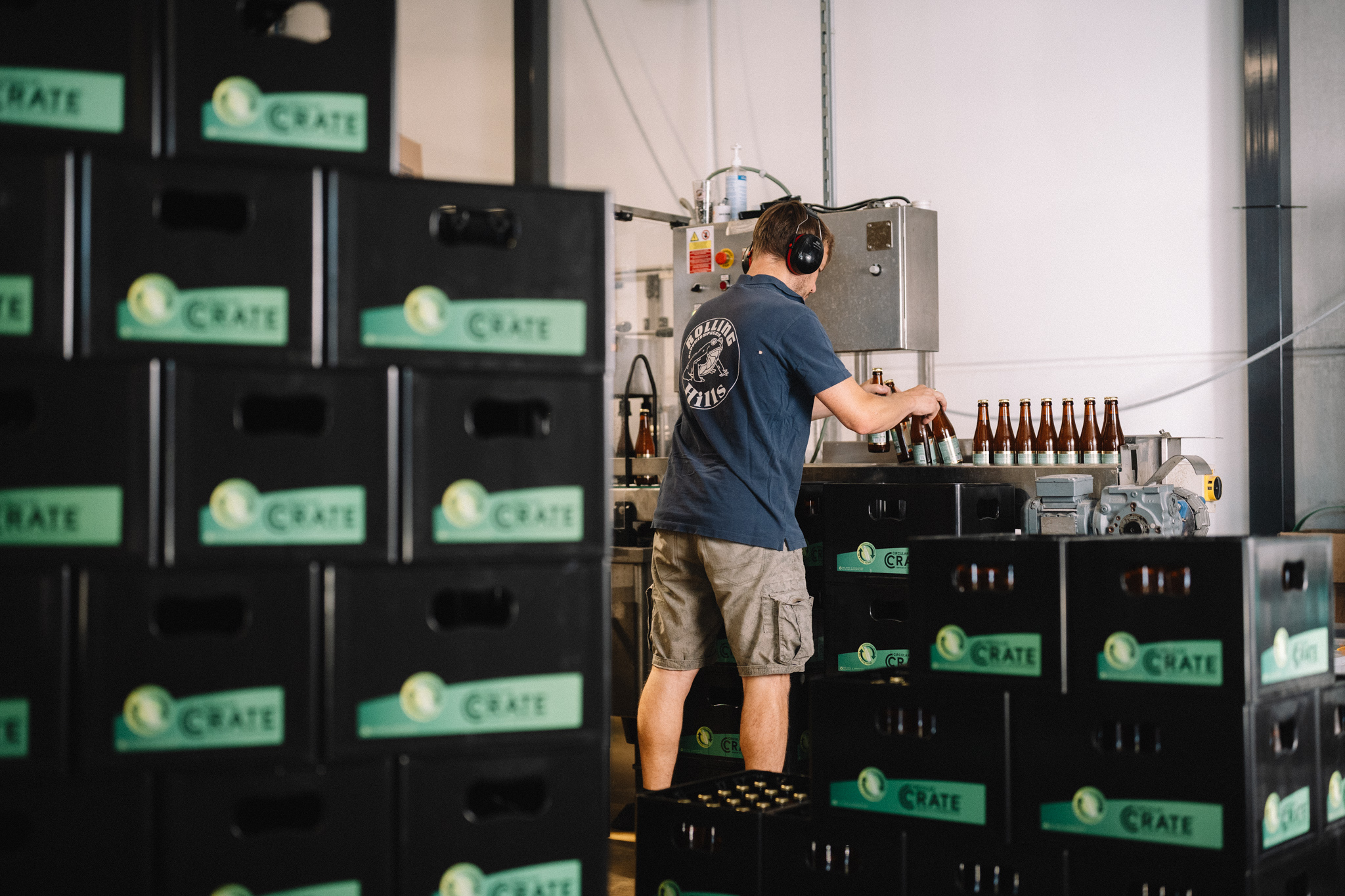
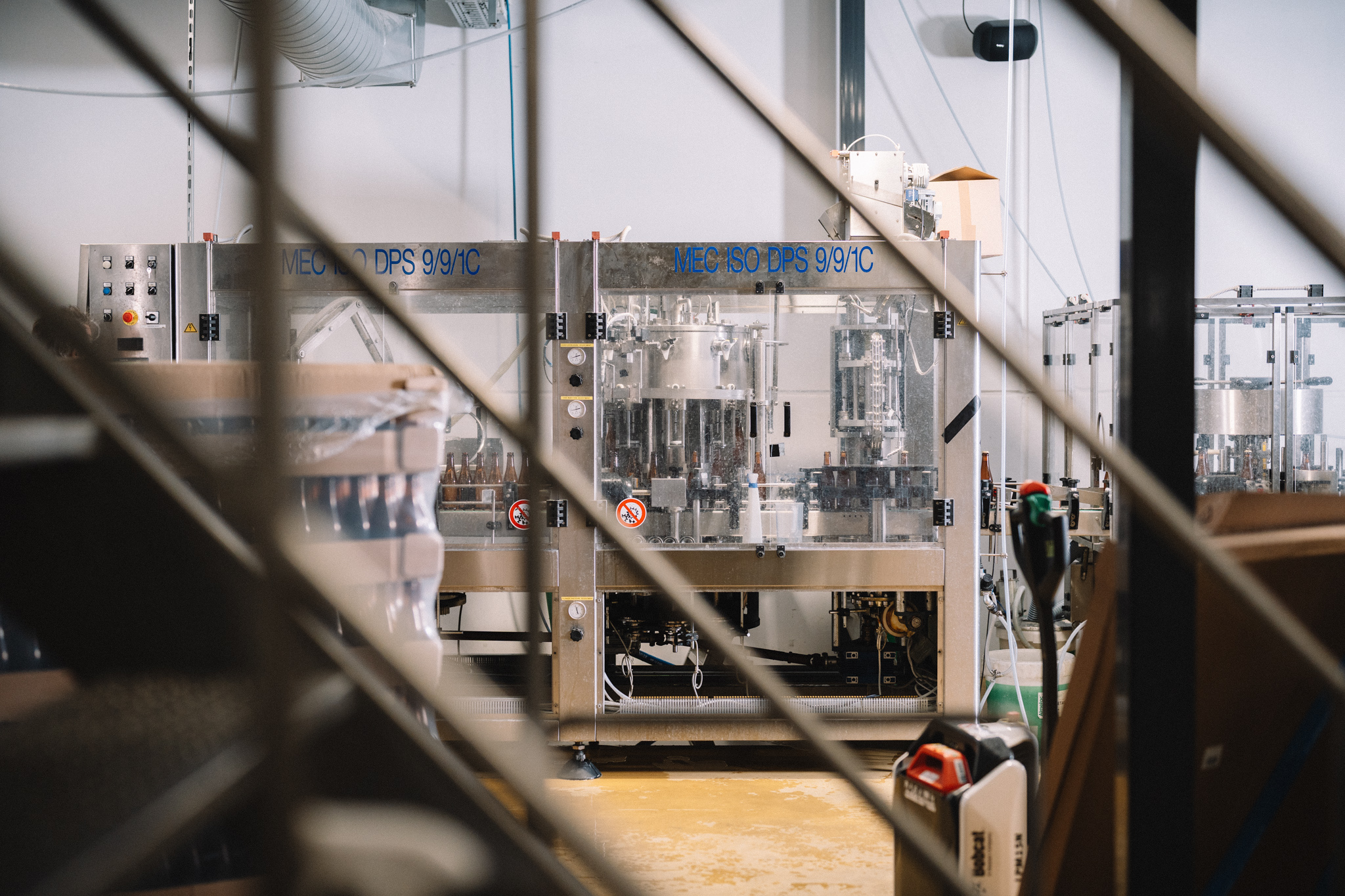
Vandermeersch and Pêtre bought the unit in Oudenaarde that Rolling Hills occupies today—not as a brewery space, but as a warehouse and a barrel aging facility so they could develop their own mixed fermentation project. They secured some buffer tanks and an old bottling line. “At that time we realised we were just an inch away from being a full blown brewery in our own right,” says Vandermeersch.
But Vandermeersch and Pêtre were about to part ways. “Emmanuel decided he had other adventures to pursue,” says Vandermeersch.
Vandermeersch had a choice to make. He could abandon the beer firm and quit beer altogether, retreating to a job as a desktop engineer inside a commercial energy project. Or he could go all-in on building a brewery with a new brand that was connected not to someone else’s legacy, but to his own soul.
It was a stressful period. Vandermeersch admits he wasn’t looking after himself. “I was a 50-year-old man in a twenty-something-year-old’s body,” says Vandermeersch of that time. “I really had to let go of everything and just do a clean reset, to just break everything down and just build something up”.
He took the jump. “After some talks, we decided to find a new name and branding that more accurately matched who we are, or who we aspire to be, in the brewing world,” says Vandermeersch. Rolling Hills was born.
It was time to get his hands on some bolts.
*
V.
Rhubarb Crumble
The second time I met Edward Vandermeersch was at the Oud Bruin Fest in 2022, a festival organised by ‘t Verzet that took place in Kortrijk to celebrate the beer style of the region.
It would be the last edition of the festival, but it was one to be remembered and it featured a wide range of producers of Oud Bruin from the region as well as those inspired to create their own interpretation.
Everyone wanted in, and Vandermeersch found himself pouring his Oud Bruin between the stands of some of Belgium’s A-listers: Rodenbach, Omer Vander Ghinste, Verhaeghe, Alvinne, De Leite, De Ranke, Dok, Vandewalle, Strubbe, La Source, L’ermitage, Antidoot, Cnudde, Liefmans, Struise, De Brabandere, Toye, Van Steenberge, Vanhonsebrouck, and, Brussels Beer Project. They even created a Megablend of Oud Bruin from all producers in attendance, sold at the festival.
Vandermeersch still looked tired when I saw him that day behind his stand, the way a founder brewer almost always does in their initial years, but he had now built his own brewery. Rolling Hills opened in 2020. His brother Karel wasn’t as involved as he had been previously, and so had stepped back from the business and their younger brother Antoon Vandermeersch had stepped in. “Antoon was already doing some commercial work for us from fairly early on,” says Vandermeersch. “It evolved and he went all-in. Now we’re full blown partners.”
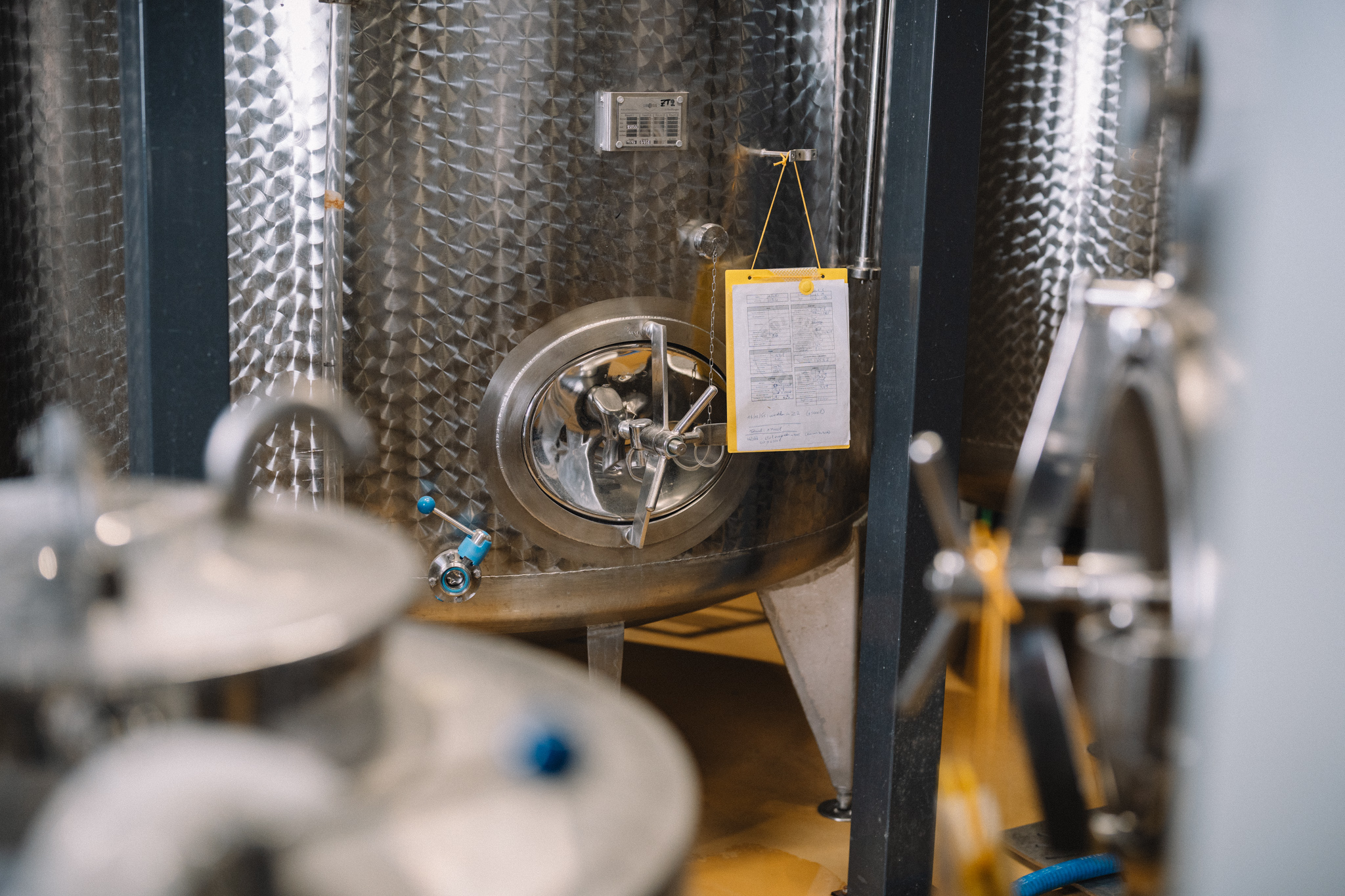
In 2023, Mathias Vanoverschelde joined the Rolling Hills team as head brewer, giving Vandermeersch the confidence to upgrade the brewery from a 10HL brewhouse to a 25 HL brewhouse. “I knew we had to expand our ambitions as a brewery to reach a more productive and healthy balance,” says Vandermeersch. “But without the right people, it’s impossible to reach that desired sweet spot.” Vandermeersch says that Vanoverschelde gives him the time to think and that his head brewer is “intensely creative and interesting”.
At the festival stall, Vandermeersch pours me his Oud Bruin. It was different from the more refined version I tasted on my recent visit, but it’s the same beer in essence. The Rolling Hills Oud Bruin boasts a big red fruit character, with a noticeable but soft lactic acidity (Vandermeersch refers to it as a “playful sourness”). It also presents with a pleasant malt character—caramel-toffee, molasses, umami—without being too sweet. The base beer is an evolution of the Courant, which Vandermeersch describes as “like a mineral malty dark southern English ale.”
The culture he uses evolved from early tests in Erleynmeyers, one that gave “a fat lactic, rhubarb crumble vibe,” according to Vandermeersch.
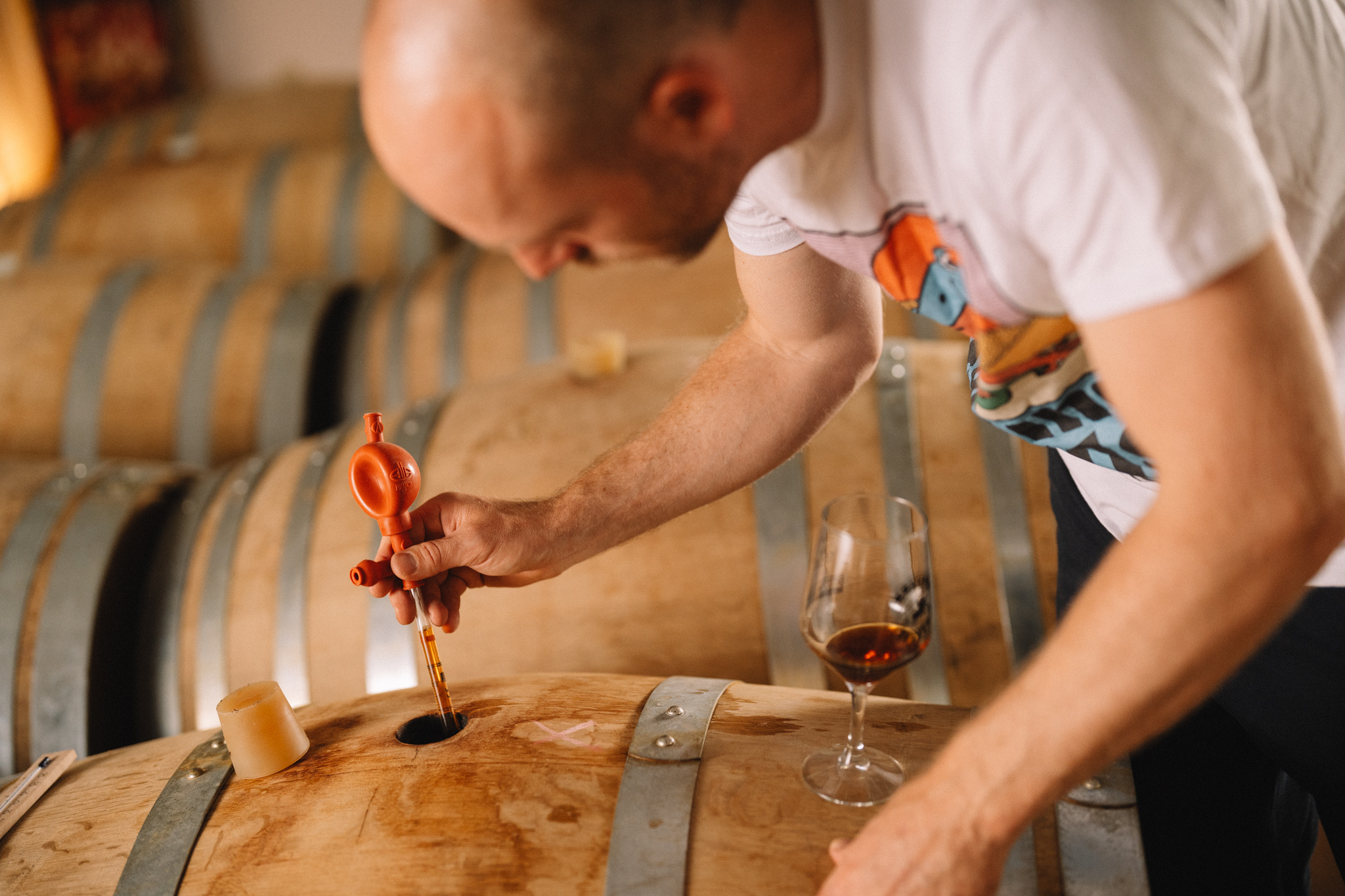
Vandermeersch inoculates a clean ale and ages his Oud Bruin for two years.
For the first year, it’s aged in a stainless steel tank with his “rhubarb crumble” culture. “It’s like a sourdough tank that never goes dry,” he says.
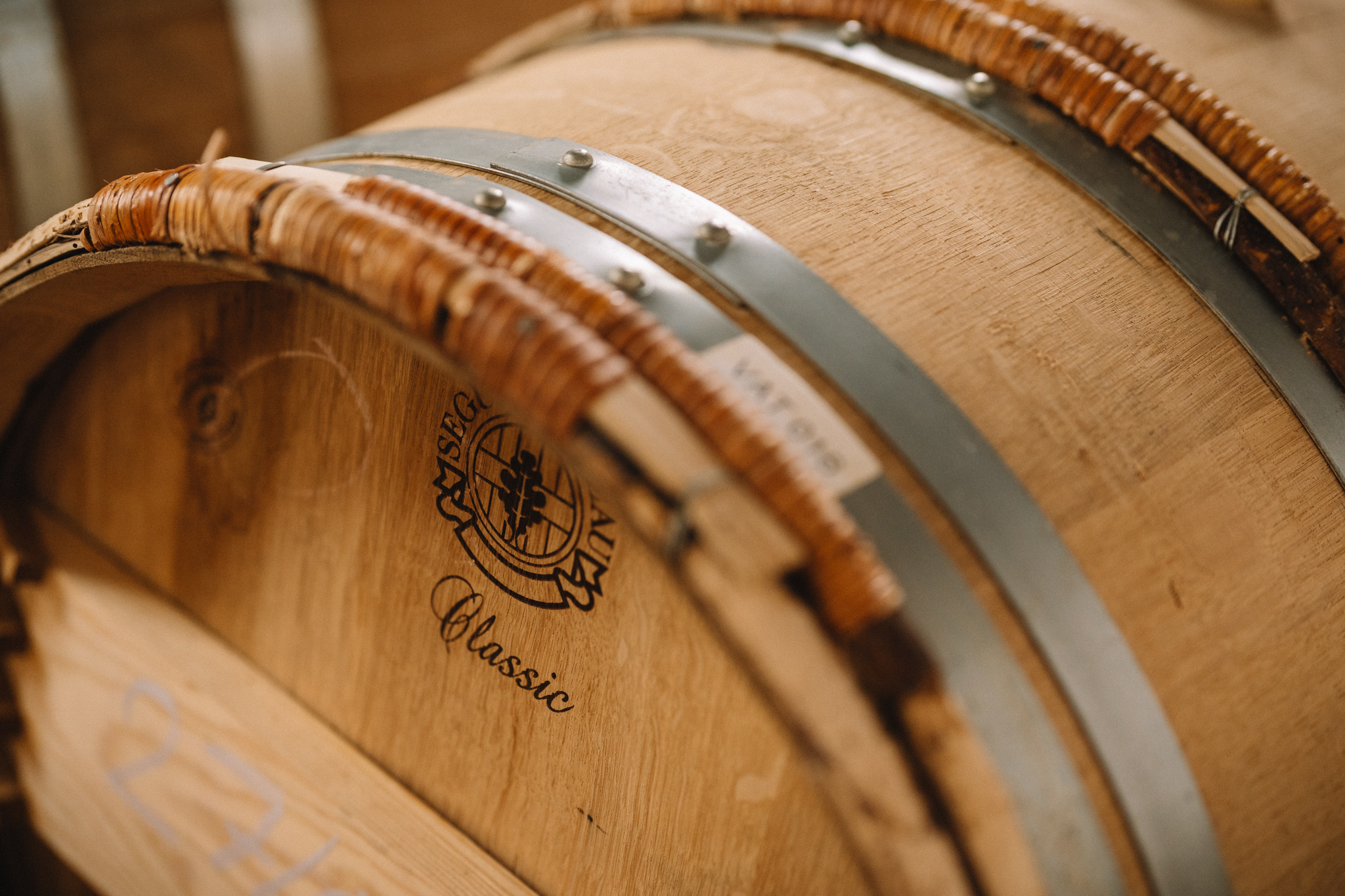
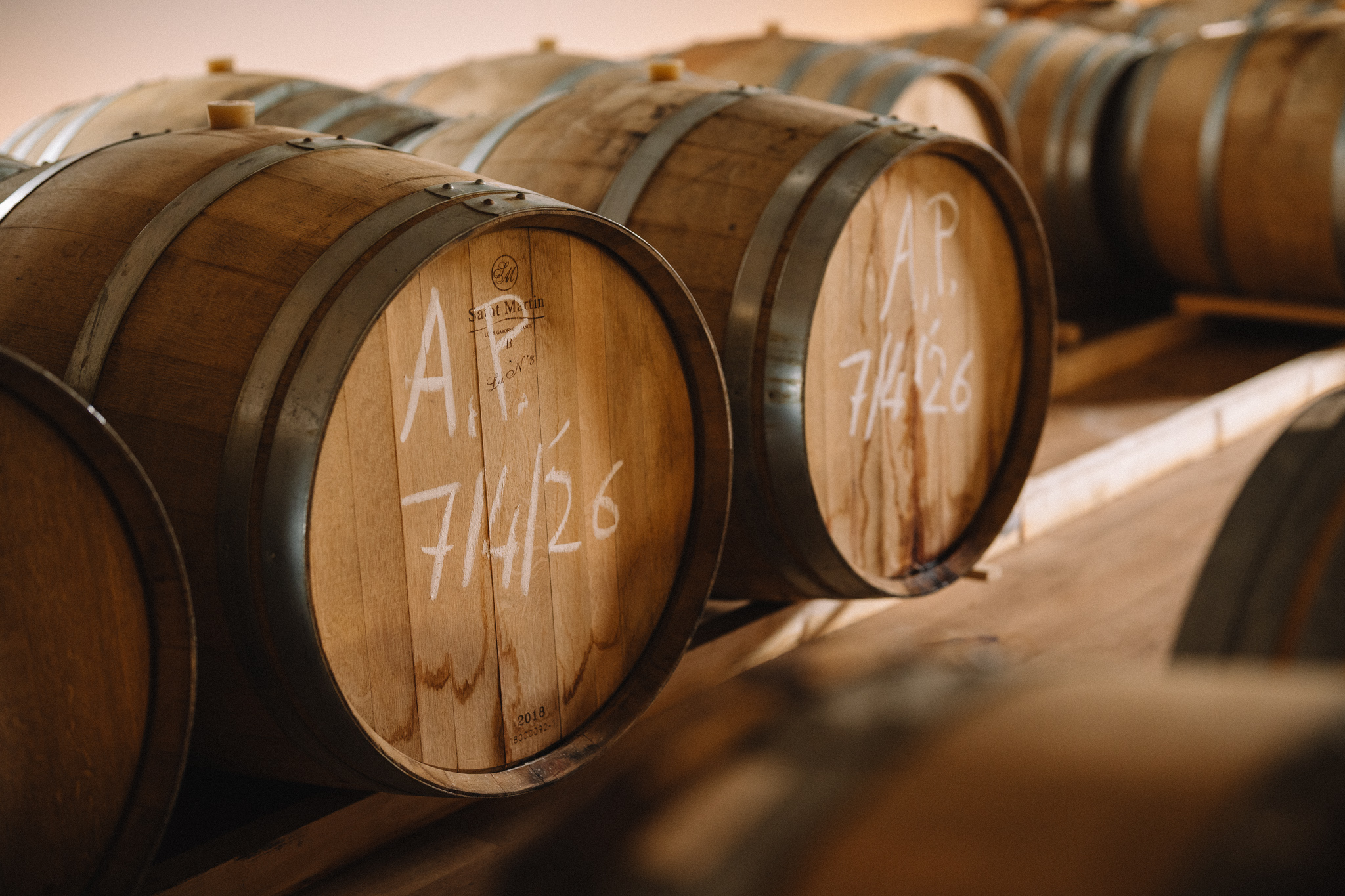
During the second year, the beer is aged in French oak barrels, all of which are sourced from Jacques Thienpoint’s Le Pin and Chateau Lafleur estates. He blends and bottles once a year.
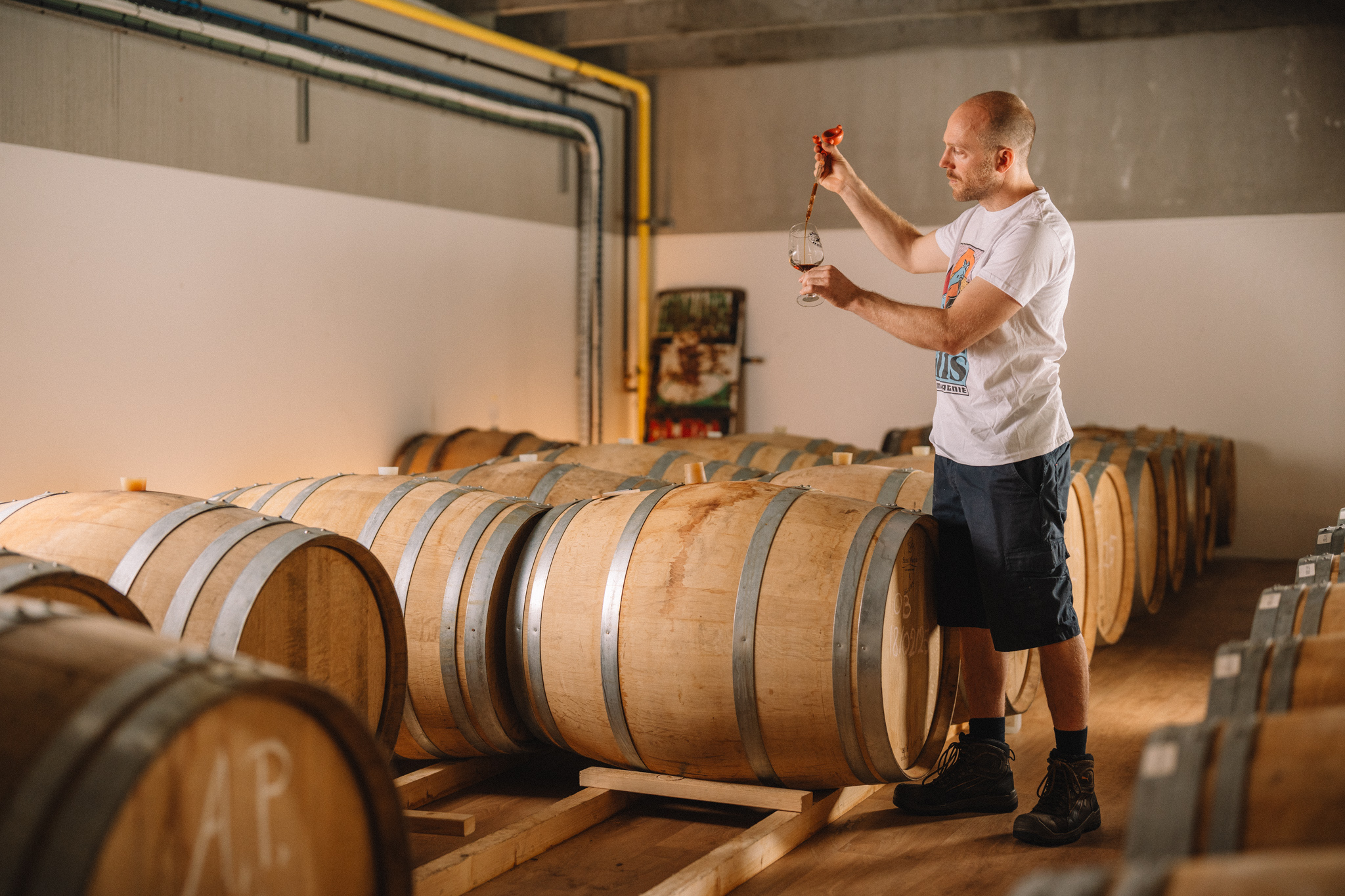
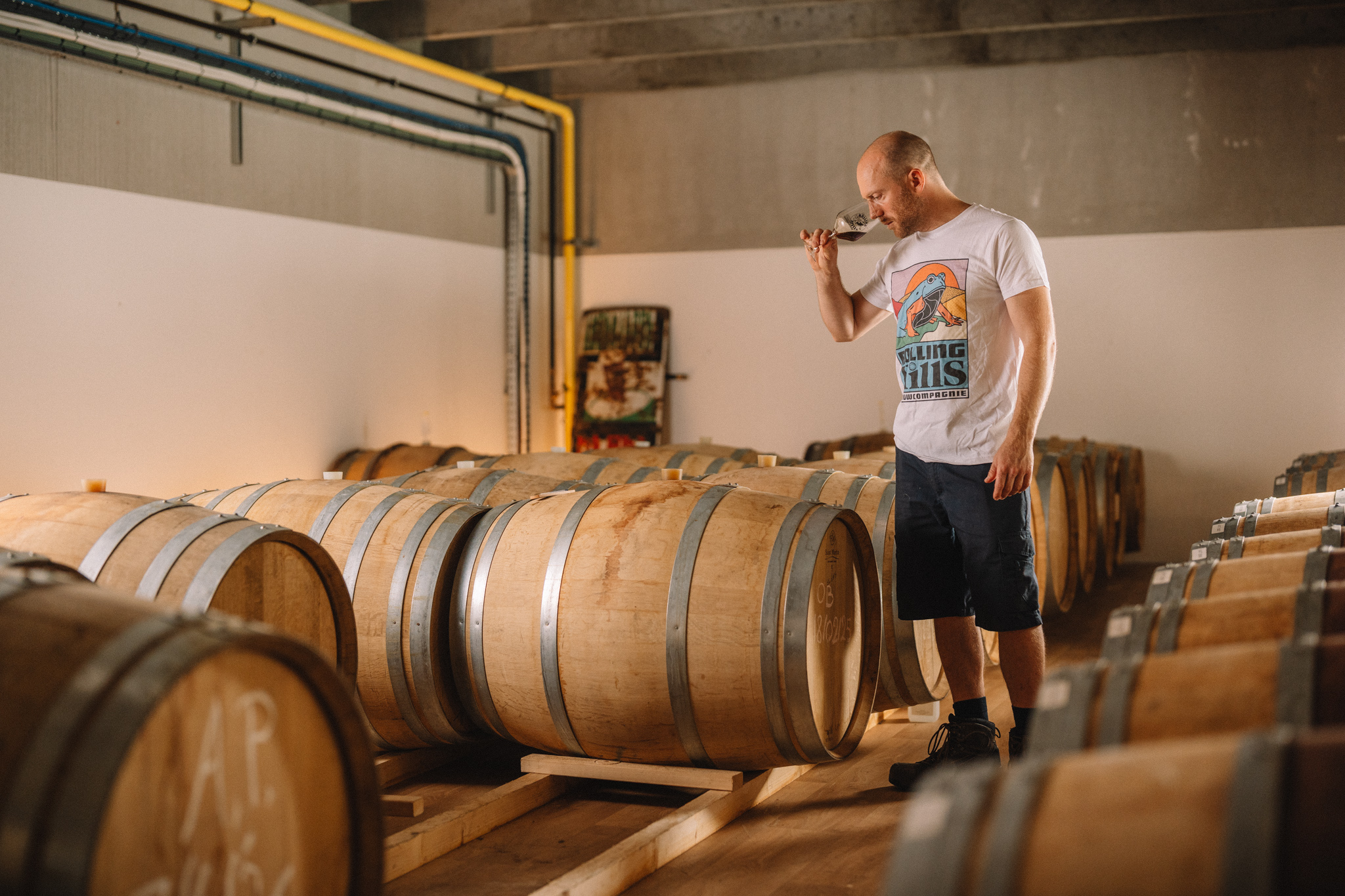
“Thienpoint didn’t understand anything about the product,” says Vandermeersch of the winemaker’s interactions with Oud Bruin. “He was like, this doesn’t make any sense to me. He’s so deep into this classic big red Bordeaux that the flavours are too out there for him.” But Thienpoint respected Vandermeersch’s passion and agreed to help with sourcing barrels.
Vandermeersch describes them as “high-end barrels” that he says let in less oxygen than other barrels. “I love working with these barrels because they guarantee top quality and handling,” he says. “They very meticulously use their barrels as to not overdo the oak flavour. They would call it a Pannelat, or let’s say oak juice. This means that when they are rotated out of the winery, there is still a lot of flavour potential in these barrels.”
Vandermeersch also produces an Oud Bruin Héritage, a version aged for 24 months in single origin Bordeaux barrels from Thienpoint. The label of the Héritage features the maritime pine tree, referencing both the wood he worked with for years as a biomass engineer in France, as well as Le Pin winery from which the barrels were sourced.
Vandermeersch says that he has to make Oud Bruin because he’s from Oudenaarde and because he loves mixed fermentation. But he’s glad that he’s not relying on it for commercial survival and acknowledges that it’s an incredibly challenging beer to produce from a technical standpoint.
As my brewery visit comes to an end, we finish our tasting by sharing a bottle of his Oud Bruin and I watch him sit back and look at the glass.
“As I’m drinking this, I can’t believe that we got there,” he says. “To have this complexity and make it year after year. I’m just a romantic with all these old stories. That drives me, just to tell people all the beautiful things of the past that are right there. But it’s such a long and lonely road to this kind of high quality product.”
It’s like he’s speaking to himself, not me, acknowledging to himself that he understands why he does this crazy thing. “If you don’t do it for yourself, it will never work,” he says. “You have to really want it.”
*
VI.
A Gentle Gesture
In 2024, Edward Vandermeersch co-produced a short film.
Een Mild Gebaar (“A Gentle Gesture”) tells the story of three women who retreat to a flat by the sea. It was written and directed by Vandermeersch’s partner, Ann-Julie Vervaeke, and stars his sister Charlotte Vandermeersch, alongside actors Madiha Figuigui and Sachli Gholamalizad.
After many years of unintentional emotional distance, Vandermeersch is now much closer to his siblings. Charlotte Vandermeersch and her family moved from Antwerp back closer to Oudenaarde. Her brothers drop by and help themselves to something from her fridge every now and again and their kids play with each other a lot more. They all recently went on a ski-ing trip and talked about “the old days” together. “I think that did us the world of good,” says Vandermeersch.
Ann-Julie Vervaeke, with whom Vandermeersch has a young son and daughter, had been in the running for a full feature project for years with the Flemish government’s film subsidy program. But that project got sidelined in the wake of Covid. When she presented the idea for Een Mild Gebaar, there was interest, but without unanimity, her funding application was denied. It felt like it would never happen. Taking matters into their own hands, Vervaeke teamed up with Vandermeersch and his sister Charlotte . They scrambled some private savings between them and handed the pot to producer Dries Phlypo, who was eventually able to leverage that initial funding to secure a film budget.
The film got made. They sent it round to festivals, but no-one agreed to screen it. The film deals with the subject of abortion. “It’s an uncomfortable topic, an explosive topic,” says Vandermeersch. “So nobody selects it.”
But right when they thought it would never be shown, Een Mild Gebaar got selected to be screened at the 2024 Ostend film festival. A professional festival jury awarded the film the title of “Best Short” at the festival. “All the other films were funded by the Flemish government,” says Vandermeersch of the competition. “But ours wasn’t, and she won.”
Since that win, Ann-Julie Vervaeke has secured funding from the Vlaams Audiovisueel Fonds to write a script for a full feature film. Vervaeke describes it as a poetic horror drama about motherhood.
As my visit to the Rolling Hills brewery comes to an end, Edward Vandermeersch is still talking. And I’m still listening. I need to hear it. Climbing the rigs, touching the bolts, making the movies, brewing the beer. Doing the thing. Getting hands on. Pushing through challenging situations.
It’s the only way to feel joy; to feel movement; to feel alive.
“It was one of the biggest victories,” says Vandermeersch of Een Mild Gebaar’s win at Ostend film festival in 2024. “I have never shouted and cheered in my life as loud as in that moment.”
***