


2026 will mark the ten-year anniversary of the UNESCO recognition of Belgian beer culture as part of the intangible cultural heritage of humanity (the only country in the world to do so). The behind-the-scenes story of how Belgium pulled it off—with plot twists and political wrangling and strategic compromise—demonstrates the essence of the country’s character: ruthlessly pragmatic and quietly persuasive.
Words and reporting by Breandán Kearney
Illustrations by Gheleyne Bastiaen
Edited by Eoghan Walsh
This editorially independent story has been supported by VISITFLANDERS as part of the “Game Changers” series.
— Part One —
I.
The Message
On 30 November 2016, Belgian beer enthusiast and Brussels politician Sven Gatz received a text message from a sender in Ethiopia. The text message signified an historic moment in the history not only of global beer, but in the standing of Belgium as a country.
The message’s sender was Norbert Heukemes, a civil servant from the East Cantons, the German-speaking region of Belgium. Heukemes had been responsible for helping Gatz and others compile an application on behalf of the Kingdom of Belgium to UNESCO—the United Nations Educational, Scientific, and Cultural Organization.
Heukemes was sending his text to Gatz at the conclusion of the eleventh session of UNESCO’s Intergovernmental Committee for the Safeguarding of Intangible Cultural Heritage in Addis Ababa. He wanted to be the first to tell him the good news: Their application had been “adopted as per proposal” by the 183 nations of UNESCO’s Convention. They had won: Belgium’s beer culture was now officially recognised as world heritage.
UNESCO recognises food cultures such as Korea’s kimchi culture, Italy’s Neapolitan pizza culture, and French baguette culture as world heritage. But of all the beer cultures in the world, Belgium’s was the first—and to date, only—beer culture to receive similar recognition. Recognition meant access to UNESCO cultural funds and greater protection at home, but it also rubber-stamped Belgian beer culture as a marketable tourism product and provided a significant morale boost to the diverse community working to keep Belgium’s beer traditions alive.

This party to end all parties would be the culmination of a meandering five-year campaign, bringing together the beer community and the political establishment across Belgium’s three language communities and demonstrating how Belgium—despite its diminutive size, cultural complexity, and political tensions—is able to punch above its weight in the world thanks to the ruthless pragmatism of its citizens; their ability to embrace their complicated plurality; and their rejection of obnoxious patriotism in favour of quiet persuasion.
Gatz had planned to be in Abbis Adaba, and had even booked a flight. But less than two weeks before flying, he’d received a phone call from then-President of the Belgian Brewers federation, Jean-Louis de Perre. “He told me that we were going to do the party here,” says Gatz. If they were to do it, the celebrations at home would be, Gatz thought, like “winning the World Cup”.
II.
The Architect
Sven Gatz had been involved in politics since his student days in the mid-1980s as a member of the Volksunie—a Flemish nationalist party advocating federalism and cultural autonomy—going so far as to represent them in the Brussels Parliament in 1995, and later the Flemish Parliament in 1999. When the movement split in 2001 Gatz joined a social-liberal splinter, eventually landing in Flander’s liberal party as head of its parliamentary faction.
In 2011, he received a phone call from an old school friend: Michel Moortgat, now the CEO of eponymous family brewery group Duvel Moortgat. Moortgat was calling because the Belgian Brewers Federation, the country’s trade association representing both large and small brewers, were looking for a new Director—and wouldn’t that be something for his old classmate? The timing was propitious; after almost two decades, Gatz needed a break from politics. And though a longshot from Moortgat’s perspective, it wasn’t entirely a bolt from the blue.

Gatz had formed an emotional attachment to Belgium’s beer culture from a young age. He remembers the Molenbeek streets where he grew up smelling of nearby breweries, and as an eight year old, his parents had, once a week, started to present him with half a glass of beer at family meals.
His father had co-founded a Brussels-based beer club that would often meet in the Gatz household on Sunday evenings, and the young Gatz pined to join them: “When I went to bed, I heard them laughing. In the morning, I saw the battlefield, with all the glasses.” At age 17, a club member left and Gatz took his place, remaining a member to this day, and he went on to write Brussels pub guides while still active in politics.
So Gatz accepted Moortgat’s offer, and on arrival at the Brewer’s House in 2011 found work already underway on the UNESCO application.
Belgium were not strangers to UNESCO heritage applications. The Grand-Place of Brussels, on which the Brewer’s House is located, is a World Heritage site.
But securing recognition for the country’s beer culture was a task, Gatz realised, of another order. The first phase would be to secure its recognition by all regions and communities of the nominating country.
Recognition of beer culture in Flanders had already been secured in 2011. Then, in 2012 the Walloons signed beer culture into the French-speaking Community’s cultural register. All that was left was to convince the third official Community of Belgium—the German-speakers of the East Cantons. Sven Gatz turned his attention east.
*

— Part Two —
III.
The Signatory
In 2004, aged just 24-years old, Isabelle Weykmans of the liberal Partei für Freiheit und Fortschritt was elected as the first female Minister of the German-speaking Community of Belgium, responsible for culture. Twenty-one years later, Weykmans still holds the portfolio.
Only 78,000 people live in the area under her remit, in towns like Eupen, Malmedy, and St. Vith, and across the rolling hills, forests, and valleys at the western edge of the Eifel–Ardennes that comprise Belgium’s German-speaking East Cantons. Its people make up less than 1% of Belgium’s population.
Historically, the East Cantons were part of Prussia and later Germany for periods during both World Wars, being transferred back to Belgium in 1919 and again in 1945.
German-speaking Belgians use the phrase “belonging by choice” about their relationship to—and pride at being a part of—Belgium. It’s a very Belgian kind of patriotism: pragmatic and peaceful, grounded less in flag-waving and more in civic participation.
That being said, until Gatz approached Weykmans, the East Cantons had never nominated anything at all for UNESCO recognition. Partly this was because of the established traditions that balanced the representation of the country’s two largest language communities: a rotating partnership whereby the Flemish- and French-speaking communities took turns each year to make submissions, never submitting together. Historically, this had left the German-speakers out in the cold. Except now, the rest of the country needed them.
This was beer culture. There was no room for resentment or political score-settling. Weykmens met with Gatz, to hear him out.
If Belgium’s application was to be successful, Gatz felt, it needed to be different to business as usual. If, for example, it came from Belgium’s minority language community, a group that had never sought recognition before, it might stand some chance of expedition through UNESCO’s evaluation process.
Gatz had already secured support for this approach from the Flemish and French-language culture ministers; only Weykmans’ assent remained. Acknowledging the tensions between Belgium’s three communities, Weykmans emphasises that they usually do not encroach in cultural policy and that the East Cantons have a good working relationship with their bigger neighbours. In fact, maybe their relatively small size—geographically and politically—helps. “Everyone likes the German-speakers,” she says.
She was, in any case, delighted to accept Gatz’s pitch and, in a way, it took Belgium’s shared beer culture to deliver what was still an unprecedented political partnership. “It was the first time that Belgium put an application together as the three Communities,” says Weykmans. “It was symbolic.”
With the German-speaking Community’s recognition of beer culture secured in 2013, the path was cleared for the UNESCO nomination. With one proviso: the German-speaking community would take the file forward.
Weykmans would sign the nomination on behalf of Belgium, and someone inside the German-speaking government would have to assume the role of “administrative contact” on the file; an experienced, high-profile civil servant responsible for building the file and working with Belgium’s UNESCO diplomats.
That person would have to speak Dutch, French, and English, as well as German. And they’d have to understand Belgian beer deeply in all its facets—its production, its diversity, and the landscape of its social and commercial players.
It just so happened that such a person already worked in the German-speaking government.
IV.
The Fine Print
Norbert Heukemes knew how to work the levers of government, and he knew Belgian beer. Secretary General at the Ministry of the German-speaking Community since 2005, Heukemes had been involved in local beer clubs for years and travelled often to beer festivals and events across Belgium.
Crucially, though, he was also the owner of a small commercial brewery—Eupener Brauerei—through which he brewed and sold beer under the Cabane brand.
Heukemes’ small-batch brewery—largely traditional and sold only in Eupen and the surrounding villages as a source of community pride—made him the perfect champion of Belgian beer culture’s UNESCO nomination.
If Gatz was the architect of the UNESCO nomination, Heukemes was the lead engineer. But just as they were getting going, elections in Belgium in May 2014 threatened to derail the whole project.

If the incumbent—and supportive— Ministers of Culture were replaced by less invested successors, the whole endeavour might be dead in the water.
Fortunately, Isabelle Weykmans was re-elected and re-appointed in the East Cantons, and her new counterpart in Wallonia was quick to signal she would continue the support of her predecessor. That only left Flanders and the question of who the next Flemish Minister of Culture would be.
That’s when Sven Gatz received another phone call, from the leader of the Flemish liberals. They needed, he was told, “a Brussels liberal acquainted with culture,” to put together their governing coalition. Gatz had been out of politics for three years and was not a sitting parliamentarian. But that didn’t matter. He had the right profile. Could he help the party out?
On 25 July 2014, Sven Gatz departed the Brewer’s House to take up his new role in the Flemish government. Minister of Culture. Belgian beer had a man on the inside, a man ready to champion Belgian beer culture.
Now the hard work really started. First, Norbert Heukemes would have to demonstrate that Belgium’s beer culture actually constituted “intangible cultural heritage” as defined in Article 2 of UNESCO’s Convention for the Safeguarding of the Intangible Cultural Heritage.
For this, Heukemes intended to rely on the living set of social practices, craftsmanship, and rituals linked to brewing, serving, and appreciating beer in Belgium.
They would have to demonstrate Belgium’s knowledge of brewing and fermentation, its rituals of tasting and pairing, the rich diversity of social gatherings, brotherhoods, and festivals centred on beer culture, and the country’s culinary and artisanal expressions, including beer cuisine, beer-washed cheese, and the theatre of Belgian beer glassware.
And they would have to overcome three significant obstacles if they were to be successful.
V.
The Tightrope
The first challenge was commercial.
Belgium’s application could not be perceived as a cash cow for its industrial breweries. This was a cultural recognition—“for beer culture and not beer,” says Heukemes. Any hint of commercial lobbying would hobble the nomination.
It would be a tricky balancing act; the Belgian Brewers federation had been the nomination’s instigators after all, and counted among their number major breweries like AB Inbev, Alken-Maes (Heineken), Duvel Moorgat, John Martin, and Huyghe. To balance these corporate interests, Heukemes and his team consciously chose to focus the application on Belgium’s smaller independent breweries, the Trappists ecclesiastical breweries, Lambic producers, family breweries, and community practices.
In promotional videos they were careful to feature respected brewers from smaller independent breweries. People like Frank Boon of Brouwerij Boon and Yvan de Baets of Brasserie de la Senne. A marketing manager from Chimay spoke of the values of the Trappist order, and other luminaries of Belgian beer— brewing scientist Filip Delvaux, culinary chef Alain Feyt, and zythologist Sofie Vanrafelghem—also featured prominently.
Heukemes and his team travelled the country, meeting brewers, zythologists, NGOs, teachers, and journalists. They met with heritage and brewing bodies from different sectors and secured endorsements from, among others, the International Trappist Association, the Belgian Brewers federation, the High Council for Artisanal Lambic Beers (HORAL), and beer consumer groups from Belgium’s three language communities (as well as the one representing Brussels).
Letters of support came in from guilds and brotherhoods and educational institutions, including The Order of The Brewers’ Fourquet and the SYNTRA Brewing and Zythology Training Program.
The beer community was all-in.
*
— Part Three —
VI.
“Nomination file No. 01062”
The second stumbling block was a knottier challenge: alcohol.
The 24-country committee UNESCO established to assess Belgium’s application included Afghanistan, Algeria, Senegal, and Turkey—all countries with heavily restrictive laws on alcohol production, sale, and consumption. And, presumably, promotion.
Alcohol abuse and public health concerns became a major part of Belgium’s pitch. Heukemes and his team highlighted the “Arnoldus initiative”, a Belgian brewery-industry initiative established in 1992 which sets out the principle of self-regulation in beer advertising and the promotion of responsible alcohol use. They referenced “the BOB campaign”, a long-running Belgian designated-driver campaign co-developed by brewers, authorities, and road safety agencies in 1995.
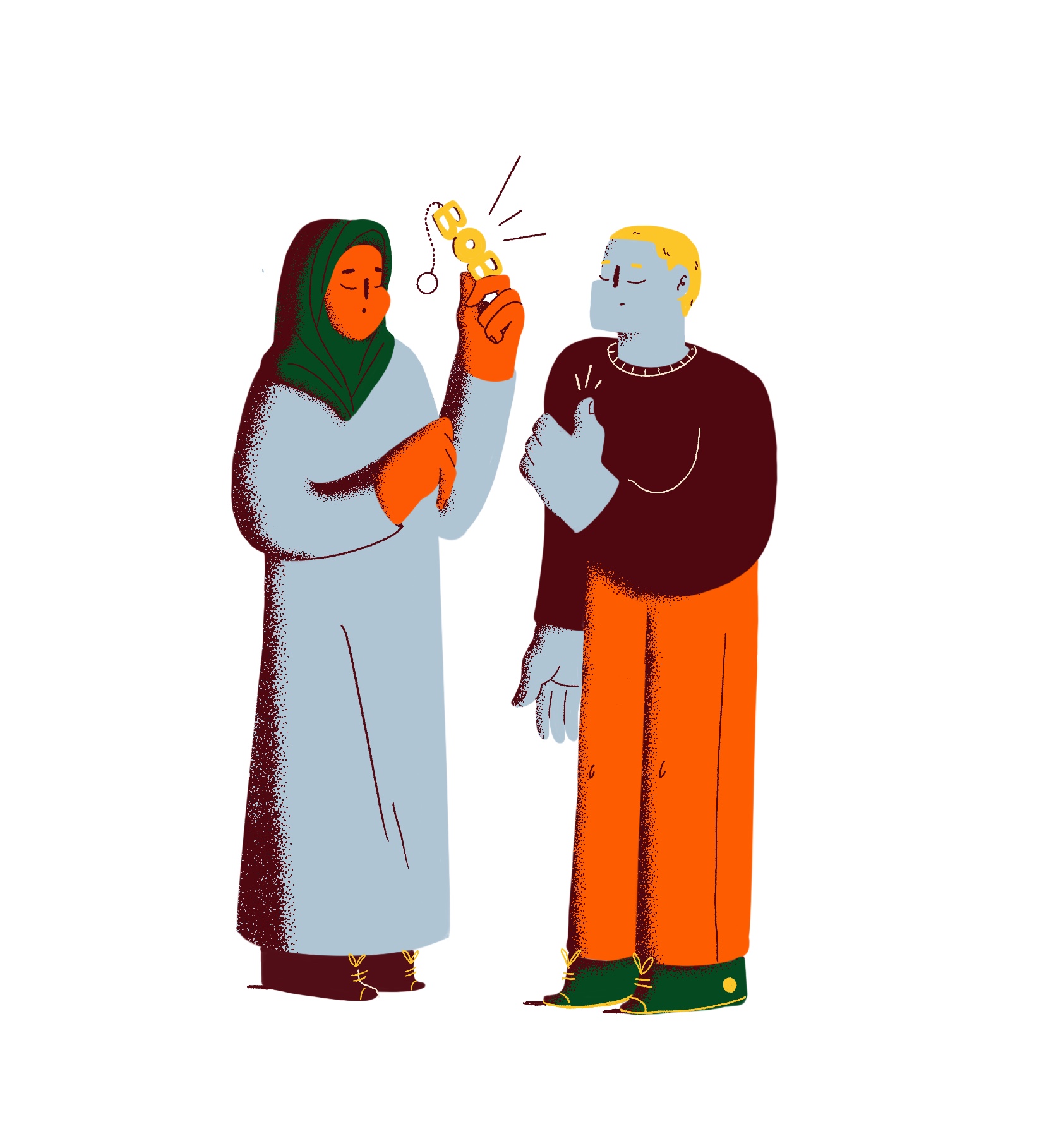
And they highlighted the national regulations forbidding alcohol use by young people in Belgium: It’s illegal to sell or serve beer to anyone under 16. Hopefully, that would be enough to assuage any concerns about sticking the UNESCO heritage brand on something related to alcohol consumption.
The final major stumbling block concerned the sustainability of Belgium’s beer culture: how healthy it was and whether the skills, education, community participation, and craft diversity needed to keep it alive were durable. Belgium needed to show safeguarding measures were in place to protect and promote its beer culture, otherwise UNESCO would be reluctant to endorse it.
Here, Heukemes pointed to the creation of a new “Observatory of the Diversity of Brewing Arts” (led by the German-speaking Community), the development of official training and professional qualifications for brewers and zythologists, and the promotion of beer routes, museums, café networks, and sustainable brewing practices.
All this, they hoped, would be enough to convince UNESCO’s evaluation committee.
On 23 March 2015, UNESCO nomination file No. 01062 (Beer Culture in Belgium) was submitted by Norbert Heukemes and Isabelle Weykmans—two German-speaking Belgians leading the charge.
Did Sven Gatz’s strategy of having Belgium’s minority language community spearhead the campaign play out as intended? It’s hard to tell, but within 18 months, the file had navigated UNESCO’s internal bureaucracy and was on the docket of the UNESCO Committee’s eleventh session in November 2016, in Ethiopia.
Just enough time for Minister Sven Gatz to work some “diplomatic” channels.
VII.
Soft Power
Several months after Belgium’s application had been submitted, in November 2015, Sven Gatz received a phone call from a Belgian diplomat in France. UNESCO was holding its General Conference at HQ in Paris and almost all of the Committee considering Belgium’s nomination would be there. Could Gatz perhaps host a beer tasting, as the Flemish Minister of Culture?
Within three days, he’d negotiated fifteen crates of beer from fifteen different Belgian breweries, with accompanying glassware, for shipping to Paris. Belgian diplomats told Gatz to be discreet: “no speech, and no lobbying,” was the directive.
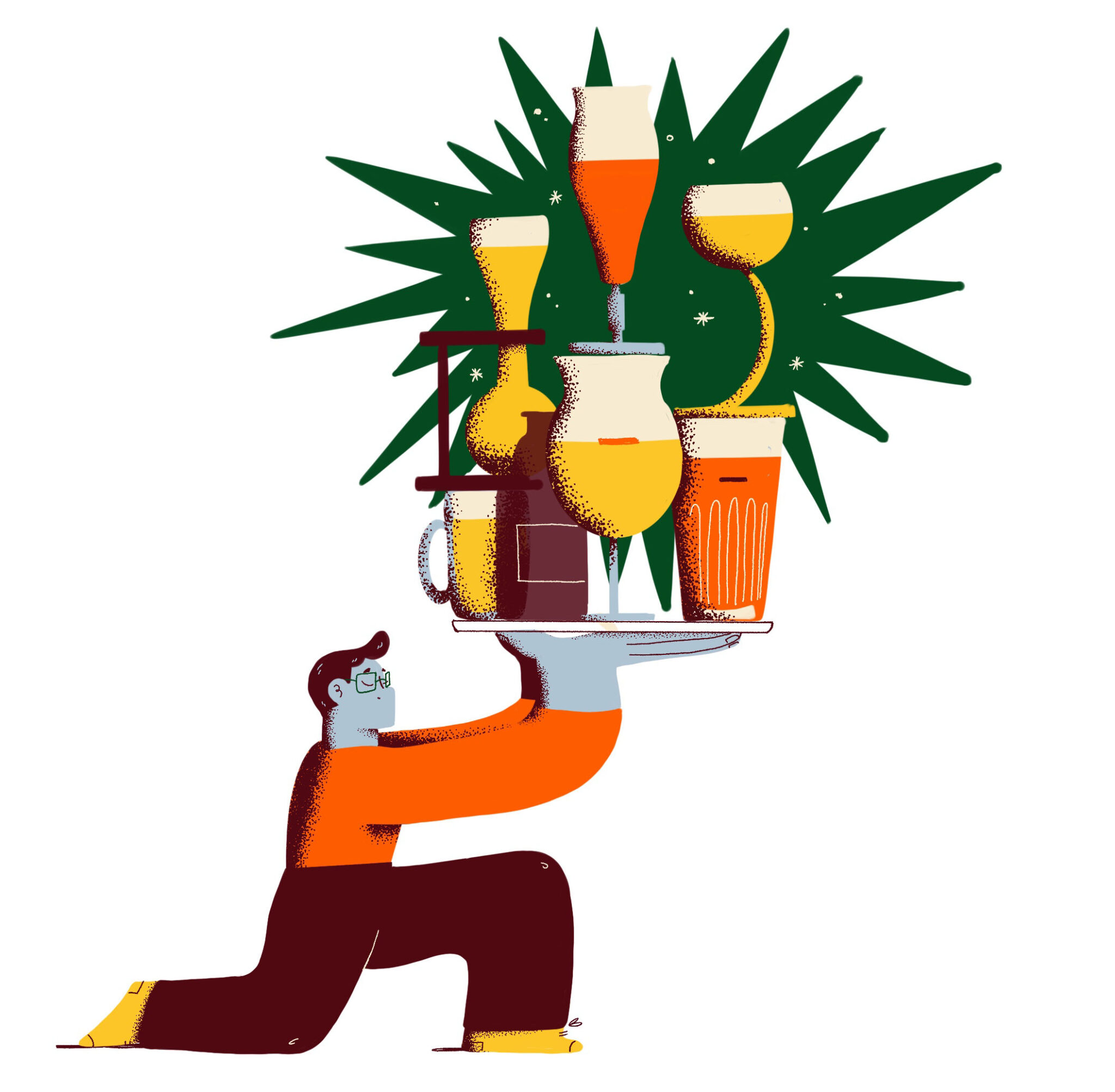
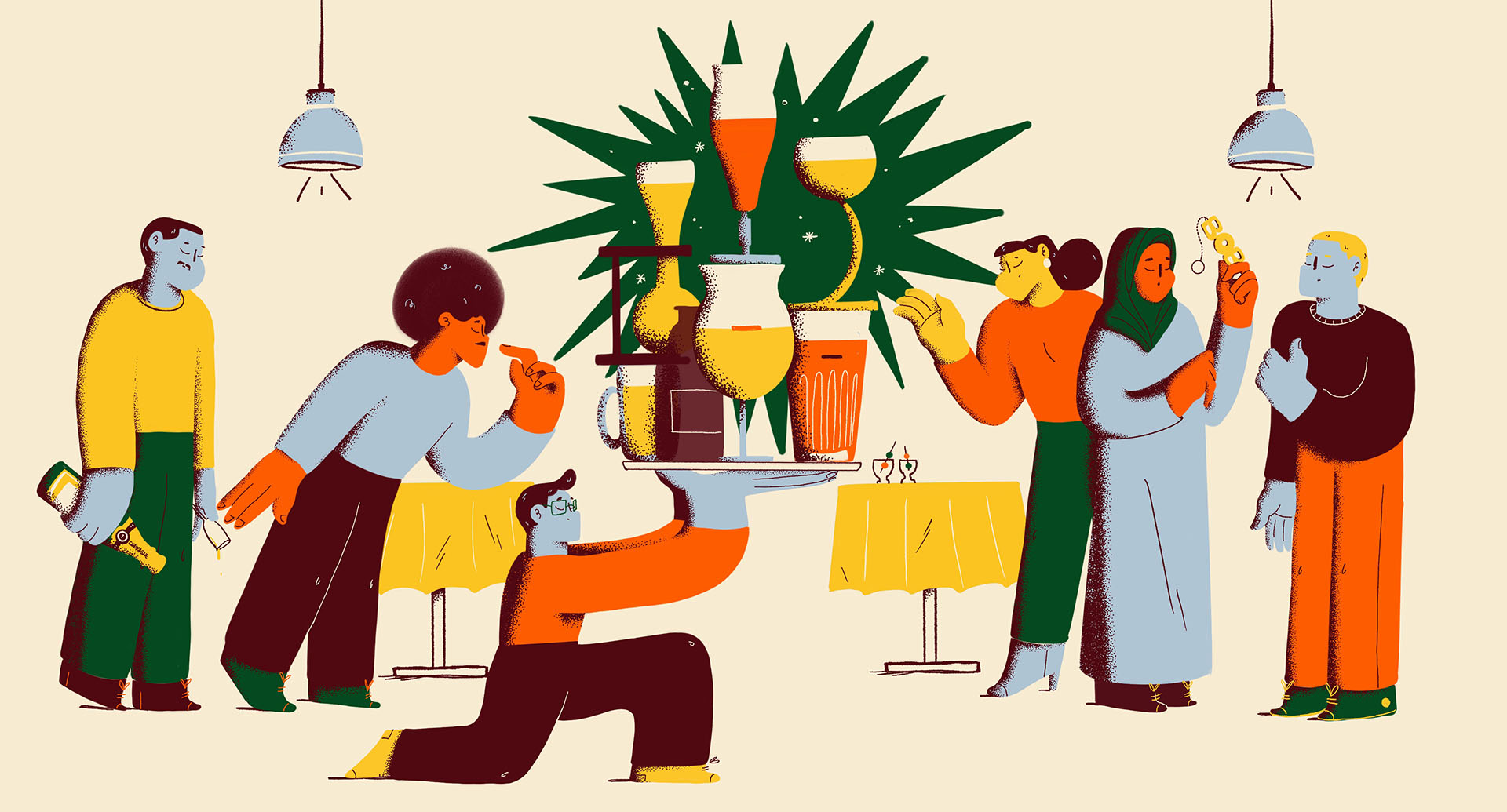
His job was simple: mingle, clink glasses, and talk. About Belgian beer. “I realised that for the first time, I had to explain to a Namibian person and a Korean person what an Abbey beer was, and why it was that good,” says Gatz.
He was helped by the spotlight Belgium’s delegation had put on the beers themselves—fifteen different beers presented in tulips and goblets and chalices; a spectrum of colours and billowing, ice-cream foam; acidic and sweet and bitter and spicy and fruity—all presented on a display table next to a French delegation’s showcase of Champagne bottles.
“I can tell you not a single glass of champagne was touched that evening,” says Gatz. “I knew at that moment, okay, it was good.” All roads now led to Ethiopia.
VIII.
The Vote
There were thirty-seven cultural nominations up for examination in Addis Ababa in 2016.
Delegates from 170 countries and organizations, including NGOs, UNESCO bodies, and the media gathered in the Ethiopian capital.
Every file submitted to UNESCO’s Committee had already passed months of scrutiny by the panel of experts charged with judging the nomination’s applicability. But inscription was never guaranteed. Many files came this far only to be referred—diplomatic speak for being sent back to their authors for revision.
At the same session, India’s nomination for Yoga faced probing questions about whether a globalised phenomenon could still qualify as “community-based” heritage, and a joint file from Slovakia and Czechia for puppetry traditions was likewise deferred. For the officials, researchers, and community representatives who had spent years preparing their files, this could be heartbreaking.

“Beer Culture in Belgium” was the fifth file on the day’s schedule. The file immediately before theirs, a Belarussian pilgrimage festival honouring the icon of Our Lady of Budslaŭ, was deemed too thin on evidence to satisfy UNESCO’s criteria.
Next up was Belgium. First would come the opinion of the Evaluation Body, then the adoption (if positive) of said recommendation by the UNESCO Committee.
Mr Eivind Falk of Norway, Vice-Chairperson of UNESCO’s Evaluation Body, took the microphone: “The Evaluation Body decided from the information included in the file that the nomination satisfies all the five [UNESCO] criteria,” said Falk. “The Evaluation Body decided to recommend an inscription of the beer culture in Belgium on the Representative List of the Intangible Cultural Heritage of Humanity.”
Recommended. But not yet adopted. Halfway there.
Mr Yonas Desta Tsegaye, Ethiopia’s Minister of Culture and the Chairperson of the UNESCO Committee, then took over: “The bureau did not receive any request for amendment of this file, so does the committee confirm that we can proceed without debate?”
Desta Tsegaye paused and scanned the room.
“I see no objection,” he continued.
“May I therefore ask the committee to adopt the draft decision on this file as shown on the screens as a whole?”
Again, he paused and looked around the room.
“I see no objection,” he repeated. “Draft decision 11.COM 10.b.5 submitted by Belgium on Beer Culture in Belgium is adopted as proposed.”
A round of applause broke out across the room. “Congratulations Belgium on this outstanding inscription,” said Desta Tsegaye. “I would like to give you the floor for your comments.”
Norbert Heukemes turned on his microphone and delegates from countries all around the world fitted their translation ear pieces and waited for his address.
“Today, I do not just represent Belgium,” said Heukemes. “I represent all homebrewers and brewers, all museums and associations, all zythologists and beer lovers; all the women and all the men who form part of this large community and contribute to the sustainability, diversity, and safeguarding of this intangible cultural heritage element.”
Heukemes went on to assure the UNESCO committee that measures had been put in place to safeguard and encourage the diversity of beer culture, taking into account “the risks linked to consumption of alcohol and also to sustainable development.” Several delegations, including Palestine, Turkey, and Senegal, would later express appreciation for Belgian beer culture’s listing but cautioned that the Committee must avoid “commercial promotion of alcoholic products.” None, however, had opposed the decision.
Heukemes finished his remarks by talking about the inscription of beer culture being “a common endeavour for us”, the people of Flanders, Wallonia, the German-speaking community, and Brussels. “Inscription is an example of the pride we feel in this joint work together,” he concluded. Another round of applause, and handshakes and backslapping from nearby delegations.
In its summary record for the session, UNESCO referenced Heukemes comments that this nomination “had been the fruit of cooperation among the three Communities of Belgium and of numerous civil-society organizations and breweries, large and small.” The Chair also noted that the nomination “was an excellent example of how intangible heritage can unite communities in their diversity.”
In the moments after the approval announcement, Norbert Heukemes took out his phone. The official statement from UNESCO would land soon afterwards, but Heukemes wanted to let Sven Gatz know immediately. Isabelle Weykemans, too. “When I received the call from Norbert, I was waiting in the car to drive to Brussels, a little bit nervous,” says Weykmans. Heukemes’ missives were the starting pistol for the party back home to begin.
*
— Part Four —
IX.
The “Special Day”
Later that day—30 November 2016—the world’s press descended on the steps of the Brewers House on Brussels’ Grand Place.
Together they posed for a celebratory photo: Jean-Louis de Perre, President of the Belgian Brewers federation, with Belgium’s three Ministers of Culture—Sven Gatz for the Flemish; Alda Greoli, recently appointed for the French-speaking Community; and Isabelle Weykemans.
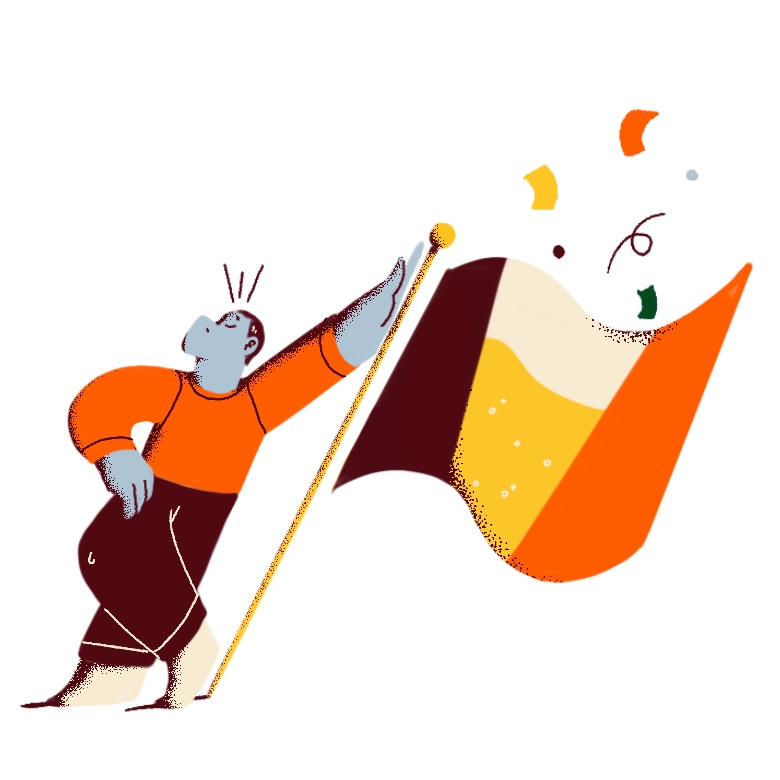
All holding up a glass of Belgian beer inscribed with the words “Fier op ons bier”—“Proud of our beer”. In the background, above the golden columns of the medieval entrance to the Brewers’ House was a Belgian flag whose central yellow element had been graphically transformed into a representation of a glass of beer: “Everything around you is world heritage,” read the text on the flag for those looking up from the Grand Place. “Even our beer culture.”
Belgium’s beer culture had become international news. “We knew that the English speaking countries would be very interested because they also have a good tradition and culture of beer,” says Wekymans. “But France was very interested and I found it a little bit surprising.”
Greoli remembers it as one of the most “special days” in her tenure as Minister. “We were in one of the most beautiful squares in the world in Grand Place and we were there together,” she says. “It wasn’t only the application for beer. It was also a big project for the country.”
Greoli’s family members had been involved all their lives in the hospitality industry, running cafés and restaurants, and she herself had an immense pride in the beers of her own region around her hometown of Spa, from breweries like Brasserie de l’Abbaye du Val-Dieu and Brasserie Sparsa: “Beer is not more from one part [of Belgium] than the other one…If you’re talking about politics, you’re French-speaking or you speak Dutch. But with food and beer, we are Belgian.”
X.
Pioneering
In the years since 2016, drinks traditions have followed in Belgium’s footsteps. In December 2024, traditional Japanese sake culture was inscribed on its Intangible Cultural Heritage list, recognized for the “traditional knowledge and skills of sake-making with koji mold in Japan”. Asturian cider culture from Spain was inscribed in 2024 too, and the ancient Georgian traditional Qvevri wine-making method in 2023.
In January 2025, the Ministry of Culture of Czechia officially added beer and brewing culture to the Czech national intangible heritage list and they have since submitted an application to UNESCO. There are moves in Germany to have their brewery traditions recognised as cultural heritage in the future (it’s been on Germany’s intangible cultural heritage list since 2020)—“The Germans are jealous,” says Weykmans, unapologetically. “But they know we have good beer.”
Actors in the UK are also engaged in an ongoing effort to have cask ale culture recognised by UNESCO. No files have been formally submitted by the UK as yet, but a petition has been launched asking the UK Government to recognise the production and serving of traditional cask ale as Intangible Cultural Heritage on their national register.
Maybe Czechia, Germany, and the UK will get there. But for now, 10 years after that November afternoon in Ethiopia, Belgium remains the only country whose beer culture is officially recognised as a part of world heritage.
It’s not all been plain-sailing in the interim 10 years.
Domestic consumption is declining as young consumers drink less alcohol. Competition from wine, spirits, and non-alcoholic options intensifies. There are barriers to international trade from Belgium with increasing tariffs on exports. There are regulatory pressures as Belgian public-health bodies push for stronger regulation. There are devastating economic challenges, with inflation, rising energy costs, and raw material crises affecting Belgium as much as any other country in Europe. And there’s been market consolidation recently that might squeeze smaller producers out and potentially reduce innovation in Belgian beer culture.
It’s not the first time, however, that beer culture in Belgium has faced existential challenges. The pragmatic reaction to such challenges by the community carrying the culture over time—the brewers, consumer clubs, trade federations, educators, café owners, politicians, and consumers—has defined the longevity and depth of Belgium’s beer culture. And as trite as it sounds, beer culture does serve as a symbolic vehicle for Belgian identity. It plays a uniting role in a federalised country with three communities divided by geography and language.
IX.
Observation
In November 2024, the “Beer Culture Observatory” hosted the second conference on Belgian beer culture. Beer industry representatives were back at the Brewers’ House in Brussels’ Grand Place for the event. Norbert Heukemes opened the conference on behalf of the organization he helped create during the UNESCO nomination process. “It is always a great honour for me to be able to address you in German in this sacred hall,” he joked in his introduction, before switching back and forth between French and Dutch for the rest of the presentation.
The event involved the presentation of a report, not full of figures, but containing subjective assessments by Belgian journalists of the evolution of Belgian beer culture in recent years — “it is not possible to express the development of a culture in numbers or in statistics,” said Heukemes.

After the Conference, attendees enjoyed a beer reception. For those that chose to walk the halls, they would have noticed a commemorative copy of the Certificate of Inscription confirming the Intergovernmental Committee’s decision hanging on a wall near the entrance to the Brewers’ House. The original Certificate of Inscription hangs at Gospertstraße 1 in the German-speaking Community’s cultural administration in Eupen, the one that Isabelle Weykmans walks past every day as Minister of Culture.
For all the strategic maneuvering, Heukemes isn’t so sure that politics played as significant a part as one might think in getting Belgium’s application over the line. Maybe the fact that the German-speakers had never before submitted to UNESCO helped somewhat to get the file on the desk of the Secretariat, he admits, but “certainly not once it was with UNESCO.”
“People like to imagine that politics is nothing other than just negotiating, but that’s not the case,” says Heukemes. “If Belgian beer culture is on the list, it is because our beer culture fulfills the criteria for the intangible cultural heritage of humanity. It’s important for Belgium to know that. We are not there because someone was very good at negotiating or at lobbying. We are there because our culture deserves to be there.”
***